
How to get good enough so that you can beat random people in a pub!
Tips from someone really strong against beginners, and really weak against chess players.
It's impossible to become a GrandMaster as an adult learner.
How many times have we heard this?
It's probably true, but everyone can get better, a LOT better!
And what about the goal?
Well, maybe it shouldn't be to become a Grandmaster, but
to beat random people in a random pub on a random Tuesday.
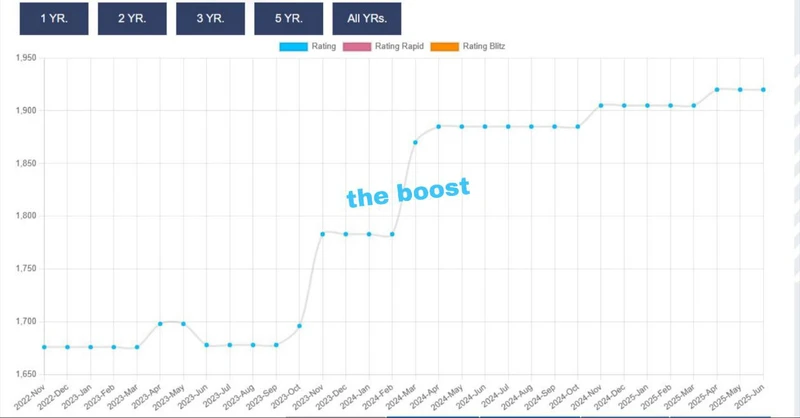
If your goal is to impress people that have to google en passant, here's my tips!
In his book Perpetual Chess Improvement, Ben Johnson identifies four pillars:
1. Play in Tournaments
2. Analyze your games
3. Calculation and pattern recognition
4. Have a Coach, friends, and mentors.
I will add the most important one:
5. Have fun
This post is gonna focus on what i think is the most direct, optimal, and quick way:
Pattern recognition and calculation ability.
1) Pattern Recognition
The spider-sense, the feeling something's up, the ability to instantly spot simple tactics.
A good way to train this?
Doing daily sessions of a few puzzle storms/races/rush.
The "Woodpecker Method": or to repeat the same set of puzzles until they become second-nature. Popularized by Tikkanen and Axel Smith with their book, I personally think the routine does not have to be specific -doing a certain amount of repetitions in a certain amount of weeks-, but simply pick a set of puzzles (does not have to be the woodpecker book), and keep going over the same sets until you instantly spot the motifs.
Try to improve precision and speed.
Very important: to improve training has to be hard, focused, and active.
Resources:
Lichess has a myriad of free puzzles, Chesstempo is also an amazing resource, but here are some Chessable courses that I've completed and can personally recommend.
Beginner Friendly:
-On the Attack Series on specific pieces (Free): (Knights, King, Queen, Rooks, Bishops)
-General themes (Free)
–Common chess patterns (Link) (not free)
-To spot checkmates quickly: Checkmate Patterns Manual (not free)
Intermediate / Advanced:
-1001 Chess exercises for Club Players (loved this, especially the chapters by theme) (not free)
-1001 Advanced : (more about calculation than pattern recognition) (not free)
-Woodpecker Method: chessable course
Extra: The endgames!
Although not strictly about tactical vision, a good knowledge of endgame patterns will work wonders, especially since it's often disregarded by online players that see endgame strategy as a flagging fest. Again I like training these on chessable because of spaced repetition, but Lichess has amazing resources on thematic puzzles and endgame sparring.
-Puzzles by themes: https://lichess.org/training/themes
-Practice key endgames: https://lichess.org/practice
-Listudy endgames: Link
-Basic endgames on chessable : Link, free
-Silman endgames: the holy grail! from beginners to 2200+, the explanations stick, and i really value repeating the exercises on chessable for better recognition (link) (not free)
-100 Endgames You Must Know (100EYMK) : i recommend doing these if silman was not enough, to really remember those patterns (link, not free)
Final Thoughts
Pattern recognition is not everything, but it is helpful not only for blitz games, but to cut down on calculation energy, time spent, and to recognize candidate moves efficiently.
That said, if your aim is to improve in classical chess, and have fun with OTB tournaments,
Calculation ability is the most important aspect that amateurs can improve.
But I will cover it in the next blog post!
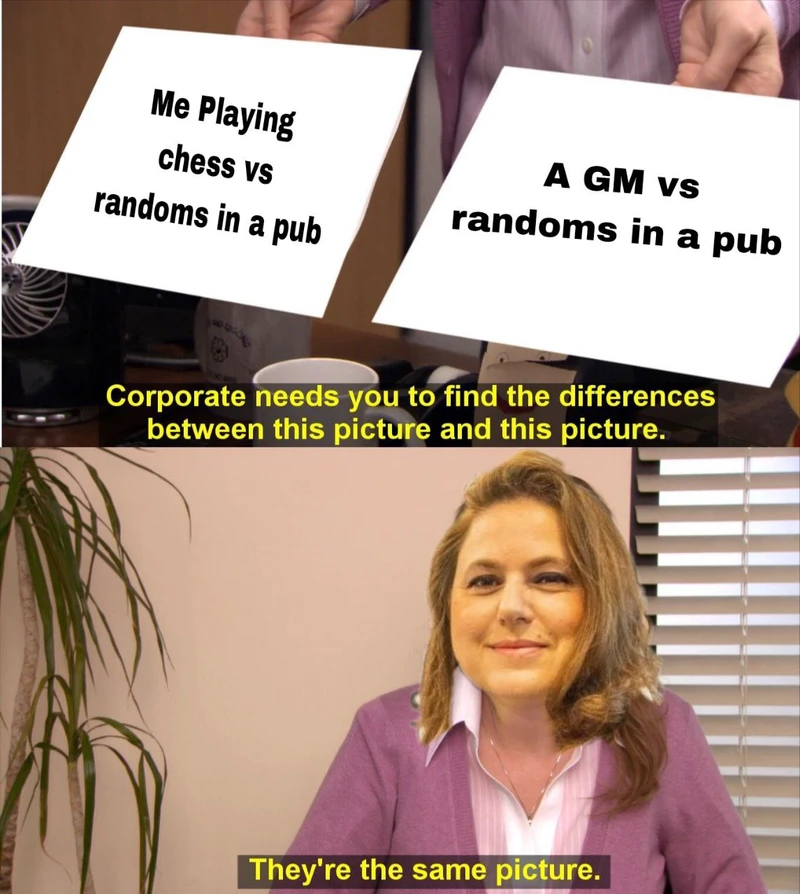
Good luck beating random people at the pub on a random tuesday hoping that GMs don't show up.
What are your favorite resources?
You may also like
 Feet_Barbie
What Gukesh Should have played in Game 14!
The Lasker Special: My Analysis of a wild attack against Nf3 g3 systems that won Game of The Month i… ChessMonitor_Stats
Where do Grandmasters play Chess? - Lichess vs. Chess.com
This is the first large-scale analysis of Grandmaster activity across Chess.com and Lichess from 200… FM CheckRaiseMate
A Strategic Rule I've Never Seen Before
How do you choose which piece to use for defense? CkickyCheck