I just lost an IRL Tournament because I thought I could "en passant" the other guy, but got called on for an illegal move.
I've tried to learn en passant on YouTube, TikTok, and Instagram, but I keep forgetting it. Could someone teach me en passant in a way that I'll never forget it?
Somebody help.
I just lost an IRL Tournament because I thought I could "en passant" the other guy, but got called on for an illegal move.
I've tried to learn en passant on YouTube, TikTok, and Instagram, but I keep forgetting it. Could someone teach me en passant in a way that I'll never forget it?
Somebody help.
https://en.wikipedia.org/wiki/En_passant
next time i will charge you for making me spend time finding this
https://en.wikipedia.org/wiki/En_passant
next time i will charge you for making me spend time finding this
The tricky move "En Passant" can be very dangerous and should always be carefully considered, otherwise it can lead to unpleasant surprises.
https://lichess.org/study/qhNqdpbS/ScC8cNPi
The tricky move "En Passant" can be very dangerous and should always be carefully considered, otherwise it can lead to unpleasant surprises.
https://lichess.org/study/qhNqdpbS/ScC8cNPi
https://lichess.org/learn#/15
@Tenakel said in #3:
The tricky move "En Passant" can be very dangerous and should always be carefully considered, otherwise it can lead to unpleasant surprises.
One of those moments: https://www.youtube.com/watch?v=q0RgHCsnApc
@Tenakel said in #3:
> The tricky move "En Passant" can be very dangerous and should always be carefully considered, otherwise it can lead to unpleasant surprises.
One of those moments: https://www.youtube.com/watch?v=q0RgHCsnApc
Before playing chess on this site, players should of completed the fundamental learning section: @TALENTEDmASTER
Everyone needs to have 100% results. They should settle for nothing less than 3 stars on each puzzle.
If they cannot do that, than they should not be permitted to join a tournament. If a player needs assistance to solve those puzzles, than they are not ready for a tournament.
https://lichess.org/learn#/15
Before playing chess on this site, players should of completed the fundamental learning section: @TALENTEDmASTER
Everyone needs to have 100% results. They should settle for nothing less than 3 stars on each puzzle.
If they cannot do that, than they should not be permitted to join a tournament. If a player needs assistance to solve those puzzles, than they are not ready for a tournament.
https://lichess.org/learn#/15
@TALENTEDmASTER said in #1:
I just lost an IRL Tournament because I thought I could "en passant" the other guy, but got called on for an illegal move.
So much for a talented master..;)
I've tried to learn en passant on YouTube, TikTok, and Instagram, but I keep forgetting it. Could someone teach me en passant in a way that I'll never forget it?
Somebody help.
And how are we supposed to help you if YouTube, TikTok, and Instagram lessons didn't work out?
Just kidding.
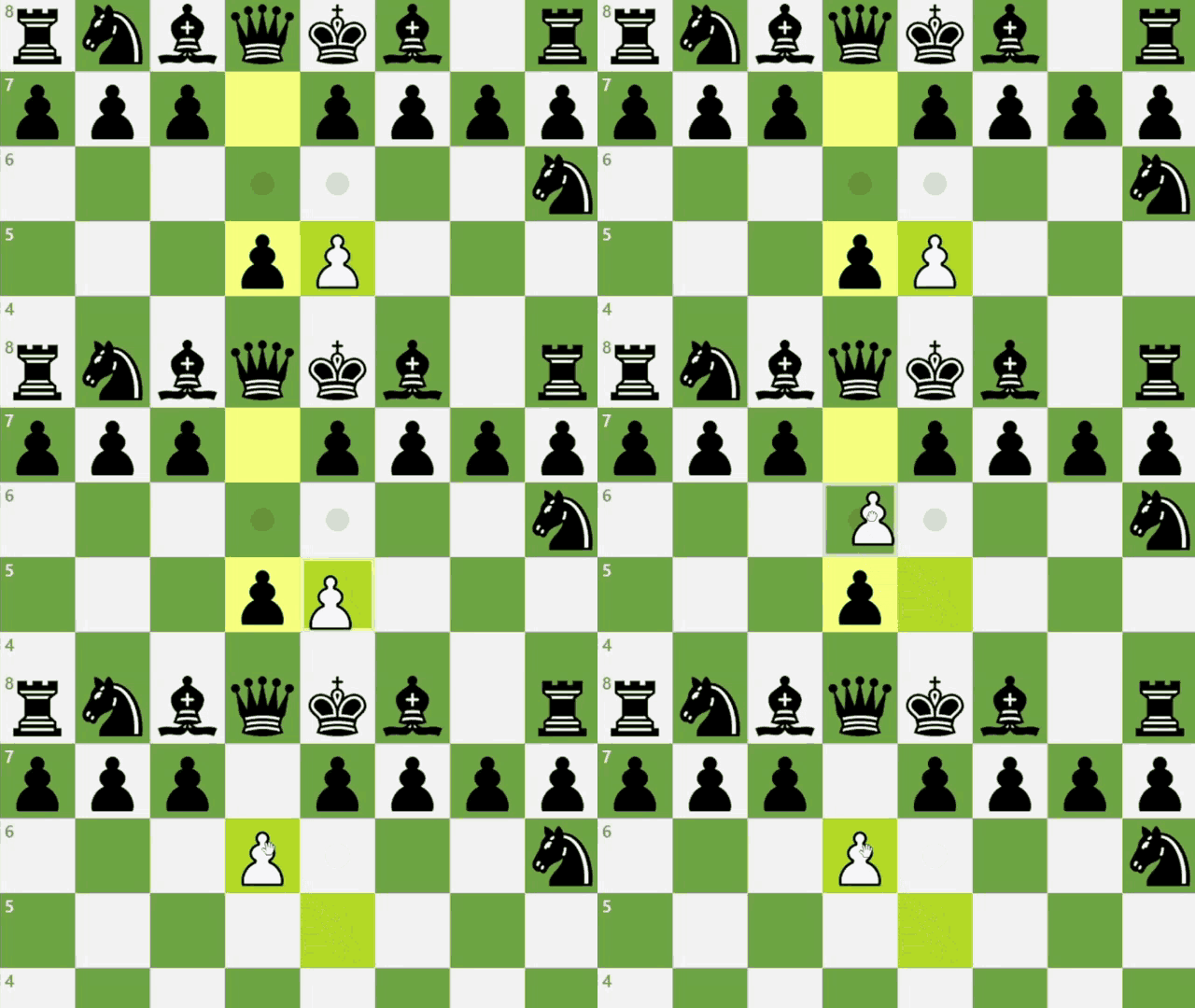
When an opponent's pawn advances two squares from its starting position and lands next to one of your pawns, you can execute the "en-passant" move. In response to this move, you have the option to capture that pawn as if it had only moved one square forward, by moving your pawn diagonally to the square the opponent's pawn crossed over, as shown in the GIFs below:
https://i.postimg.cc/RZvMNXBZ/en-passant-chess.gif
https://i.postimg.cc/9MmXKbLk/en-passant.gif
Watch it a hundred times and it'll eventually sink in. If it doesn't, I'm not sure what else would work besides scheduling an appointment with a psychiatrist :)
Good luck!
@TALENTEDmASTER said in #1:
> I just lost an IRL Tournament because I thought I could "en passant" the other guy, but got called on for an illegal move.
So much for a talented master..;)
> I've tried to learn en passant on YouTube, TikTok, and Instagram, but I keep forgetting it. Could someone teach me en passant in a way that I'll never forget it?
>
> Somebody help.
And how are we supposed to help you if YouTube, TikTok, and Instagram lessons didn't work out?
Just kidding.
When an opponent's pawn advances two squares from its starting position and lands next to one of your pawns, you can execute the "en-passant" move. In response to this move, you have the option to capture that pawn as if it had only moved one square forward, by moving your pawn diagonally to the square the opponent's pawn crossed over, as shown in the GIFs below:
https://i.postimg.cc/RZvMNXBZ/en-passant-chess.gif
https://i.postimg.cc/9MmXKbLk/en-passant.gif
Watch it a hundred times and it'll eventually sink in. If it doesn't, I'm not sure what else would work besides scheduling an appointment with a psychiatrist :)
Good luck!
Learn the e.p. rule from GM Gustaffson and watch GM Svidler crack up when there's glitch in the matrix, allowing e.p. when it should no longer be allowed..
https://www.youtube.com/watch?v=0fZqooP3hSc
Learn the e.p. rule from GM Gustaffson and watch GM Svidler crack up when there's glitch in the matrix, allowing e.p. when it should no longer be allowed..
https://www.youtube.com/watch?v=0fZqooP3hSc
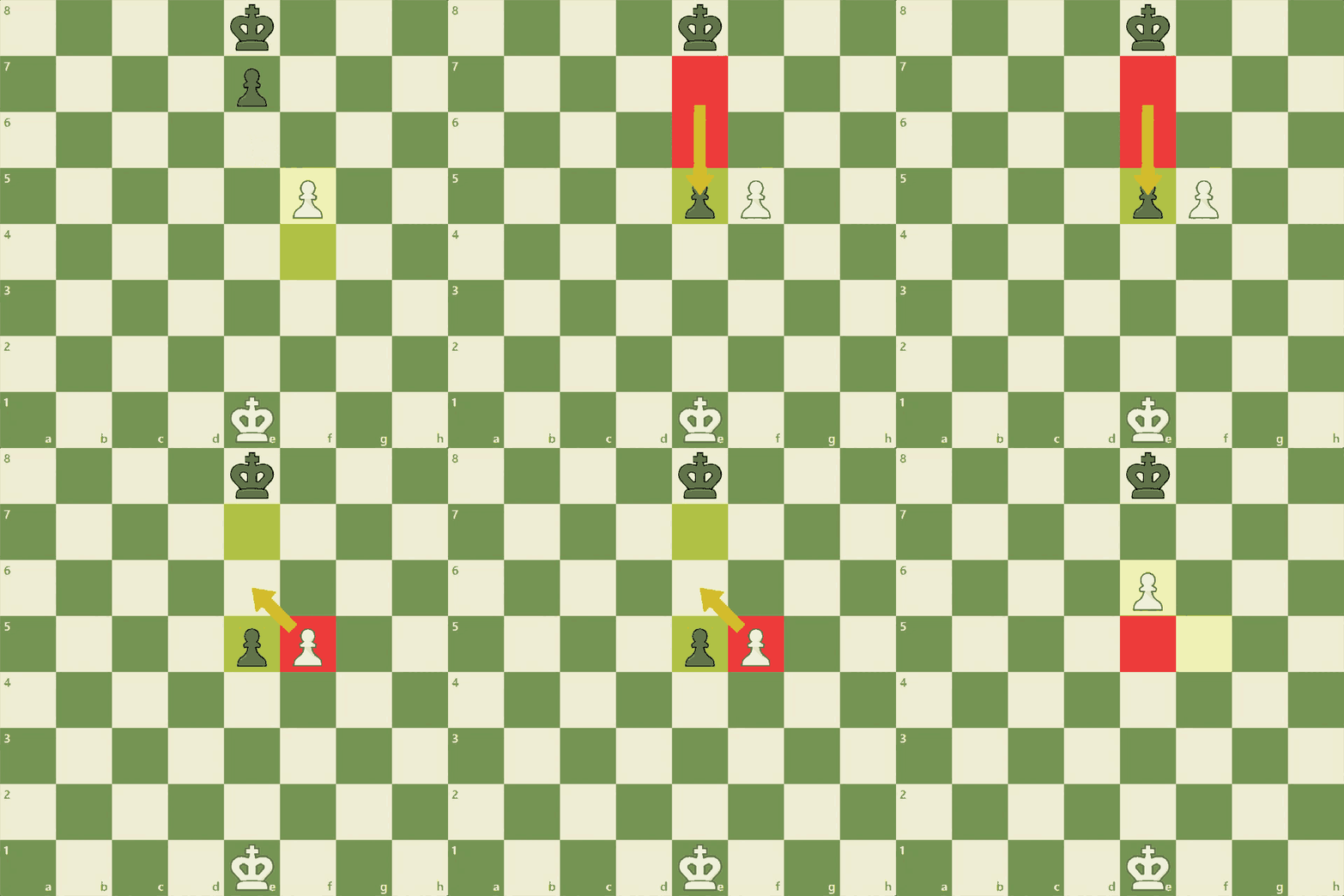
Just think of the pawn moving the two steps one after another... so you have the opportunity to capture on that in-between step. It's pretty obvious where the pawns must be in that case.
Just think of the pawn moving the two steps one after another... so you have the opportunity to capture on that in-between step. It's pretty obvious where the pawns must be in that case.
If you understand why the en passant rule exists, it is easier to understand.
Originally in the rules pawns could only move 1 square at a time, even on their first move. Allowing them to move two squares on the first move was introduced to speed up the game, or the opening at least. When you could only move one square at a time, your opponent would always have the opportunity to take you, as you wouldn't ever be able to pass your opponent without being on a diagonal. When the 'move two squares' rule came in, en passant meant that the option to take your opponent was still there, even if it seemed like your opponent had jumped right through the 'taking square'. You couldn't 'pass' without giving your opponent the option to take.
Hope that makes sense and hasn't confused you further!
If you understand why the en passant rule exists, it is easier to understand.
Originally in the rules pawns could only move 1 square at a time, even on their first move. Allowing them to move two squares on the first move was introduced to speed up the game, or the opening at least. When you could only move one square at a time, your opponent would always have the opportunity to take you, as you wouldn't ever be able to pass your opponent without being on a diagonal. When the 'move two squares' rule came in, en passant meant that the option to take your opponent was still there, even if it seemed like your opponent had jumped right through the 'taking square'. You couldn't 'pass' without giving your opponent the option to take.
Hope that makes sense and hasn't confused you further!