
How to improve in chess
This blog is about teaching and expanding your knowledge of chess strategy and moves, as well as improving your technique and moves, both in games and analysis..., -This article is also in Spanish, in my blogs
We start the game but.... What do we do? .....
Opening (start of the game)
1. Control the centre
You can start by playing g3 then Bg2 and following the opening Nf3, but I recommend starting by dominating the centre of the board, as this allows us to control a greater number of squares making our opponent unable to occupy the squares, also this will help us to be able to launch attacks on our opponent, and at the same time we will have more of an advantage.
An example is the following image...
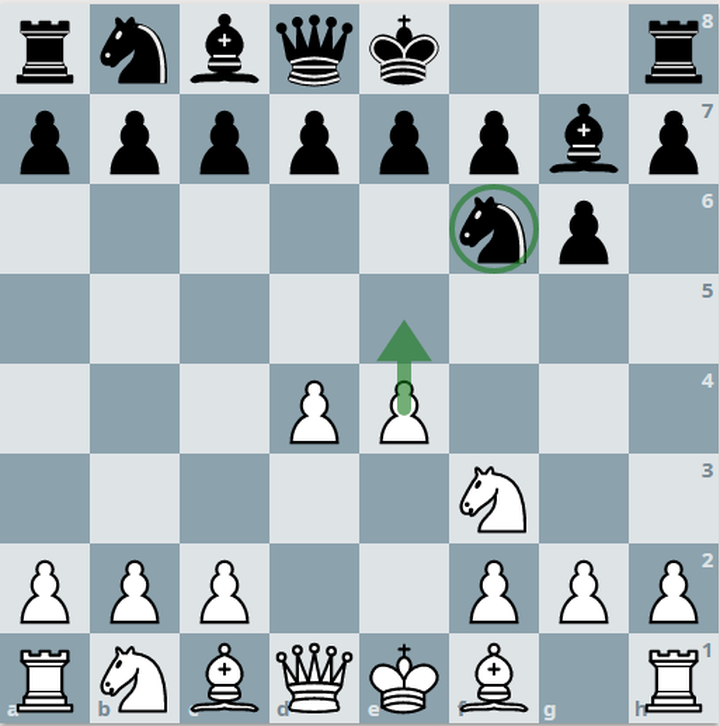
In this image we see how the centre is being occupied by white pawns, dominating the centre, and we must remember that if we manage to advance our pawns in the centre, we will have a space advantage that we can use to launch an attack..., this is the perfect example, as the white pawn located on the e4 square can be moved to the e5 square attacking the knight..., giving us a clear example of what I have explained above.
2. Develop your pieces
Developing the pieces is very important because (as I said) we can launch attacks, defend our pieces and protect them, but we have to develop them in a good way because if we are careless and develop our pieces badly our opponent will take advantage of this carelessness and will have more advantage than he had before.
A clear example of coordination and development of pieces is the following ....
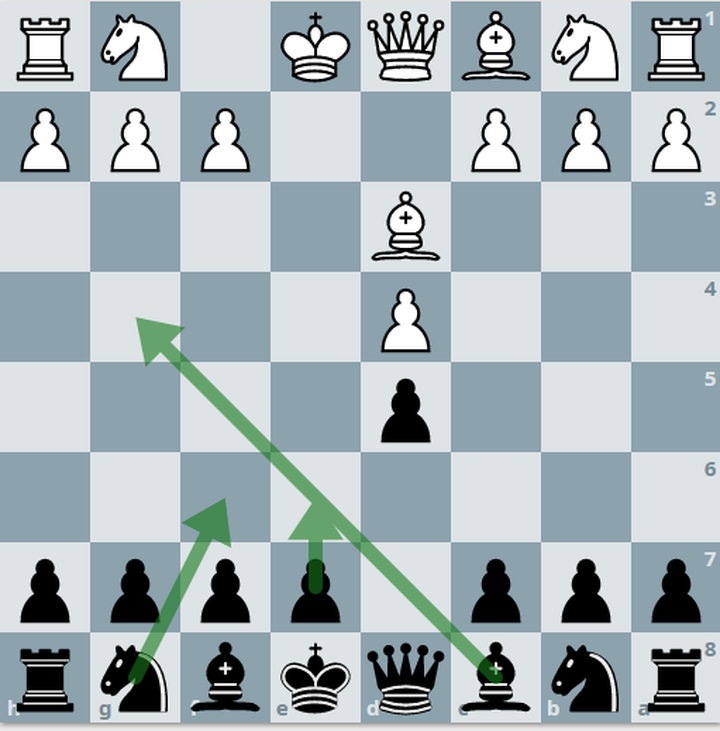
Good development. The move Nf6 with the idea of Bg4 would be a clear example of coordinating our pieces so that they all occupy a good square. Faulty development you see the green arrow on the pawn... The advance of the pawn to e6, although it strengthens the centre, does not take into account the white squared bishop, which will be very passively locked inside the pawn chain.
Half a game
3. Protect your parts
Many people do not realise how important it is to protect and defend their pieces, for example castling (either short or long), this very special move is very important and is fundamental in chess as it keeps our king safe (depending on the positions of all the pieces). Defending is equally important as it protects a piece (or several, depending on the piece and the position it is in).
4. Play with strategy
Strategy in chess refers to the elaboration of medium and long term plans, it is important to use strategy because they are decisions that we make at that moment, but that decision will affect us in the future. Some strategies that will help you are ....
1- Occupy the pieces (in this case pawns), it is very important to advance our pawns in order to gain space and look for liberating breaks in the position.
2- Create threats and avoid the opponent's threats, a good way to create threats is to look for the opponent's weak points.
An example would be the following...
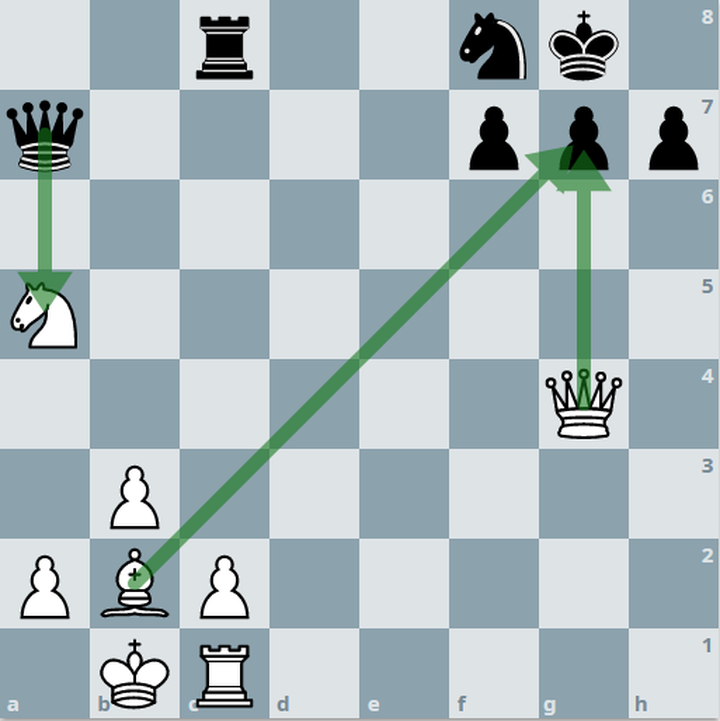
In this picture we see how the white pieces create a threat and prevent the queen from attacking the knight.
The black pieces played the queen from the square e7 (previously De7) and moved it to the square a7 (the queen) threatening the knight, but the white pieces avoid the attack of the queen to the knight, attacking the square g7 trying to checkmate and at the same time attacking the rook (position of the rook c8).... (the white pieces moved the queen from the square d1).
Finals
5. Start moving the king and your passed pawn must be advanced.
When we are taught chess, this is the first thing we are told, but... should we always apply this advice? .... the answer is NO. In the endgame we have to eliminate this thought, the king becomes an attacking piece but you must use it as such.
Un ejemplo sería el siguiente....
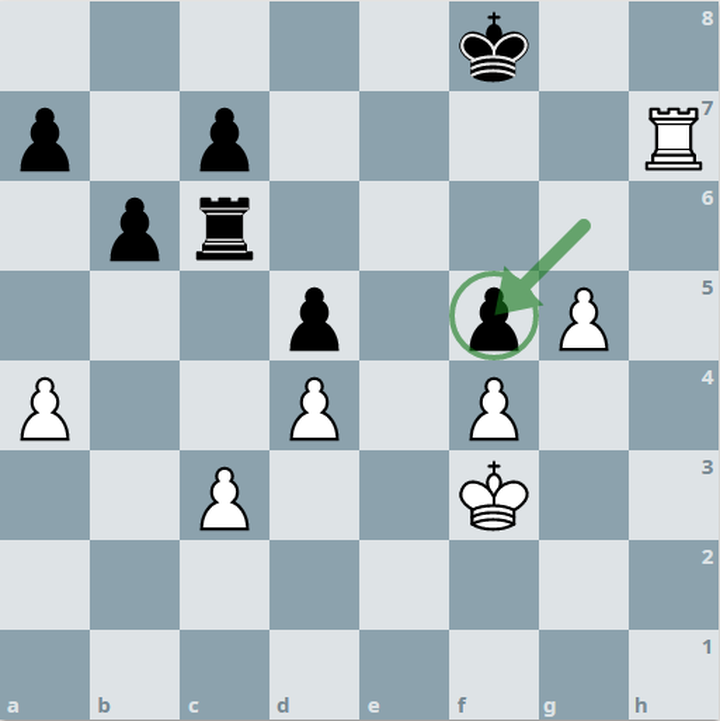
This position is from a game between the grandmasters José Raúl Capablanca and Savielly Tartakower. The Cuban genius, nicknamed "the chess machine", was noted for his great technique in endgames, and this is a clear example of that. Black threatened to capture the c3-pawn, but it was Capablanca's turn, who continued with 1.Rg3! A brilliant move of king activation that plans to support the passed pawn and attack Black's passive king.
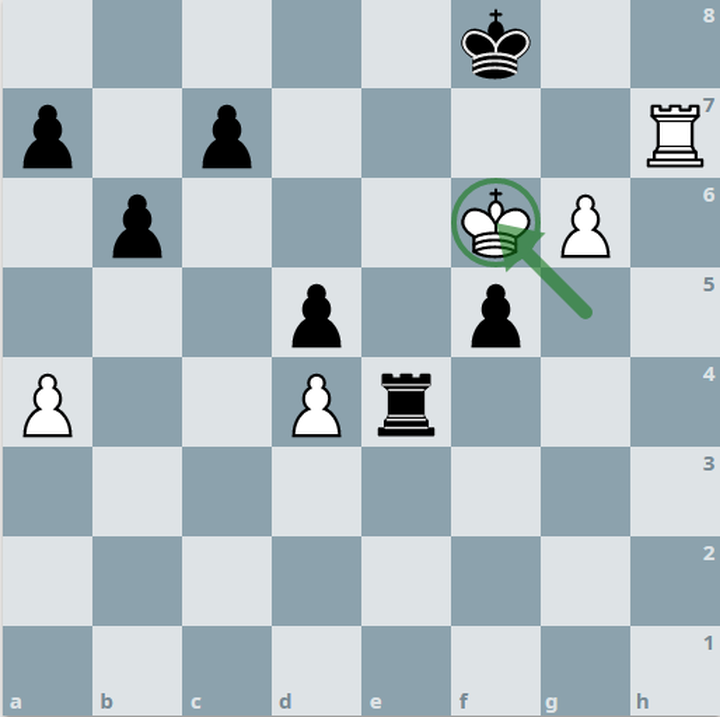
After a series of forced moves: 1...Txc3+, 2.Rh4 Tf3 3.g6 Txf4+, 4.Rg5 Te4, 5.Rf6!, Capablanca managed to get the king into enemy territory, which, supported by the passed pawn and his very active rook on the seventh rank, managed to take the victory.
If you enjoyed this blog follow me and give me a "like".
Share it to your friends, all this for more blogs.
Juansebastian2011
You may also like
 juansebastian2011
Como mejorar en Blitz-Bullet-Ultrabullet
Este blog trata de como enfrentarse en 3 modos de juego (Blitz-Bullet-Ultrabullet), intentando de en… juansebastian2011
3 openings for beginners
This blog is about teaching and inviting you to learn openings and defences, 4 for beginners, in tot… juansebastian2011
Como mejorar en el ajedrez
Este blog trata de enseñar y ampliar el conocimiento de estrategias y jugadas del ajedrez, también t… juansebastian2011
Aperturas Olvidadas: Joyas Ocultas del Repertorio Clásico
¿Estás cansado de ver siempre la Siciliana, la Caro-Kann o la Española? En este blog te traigo un vi… juansebastian2011
What is the difference between IM and a GM?
This blog tries to explain several differences between an IM and a GM, among other things. juansebastian2011