
Ryan Velez
Exploring Chess
Looking deeply at simple topics"Where have you been? Are you ok?"
Yes, I quit writing for a few months, and have had a lot of people send inquiries about that - and to the many people who asked me if I was ok, I appreciate that! Yes, I am fine.
As I enter the content creation world, I read a lot about burnout, gathering a following, etc... Well, I take breaks when I want to, because this isn't my job. If I gather enough support to make it my job, that would be different. But that is not the case currently.
Without going into massive detail, I went on a trip to Canada, I have been building customized book stands for large chess books (see pictures below), and I have been writing 2 books (one is a fiction book, the other is a chess book). I have also been reading a lot of chess books in the past few months, too, as it is the primary way I prefer to consume chess content.
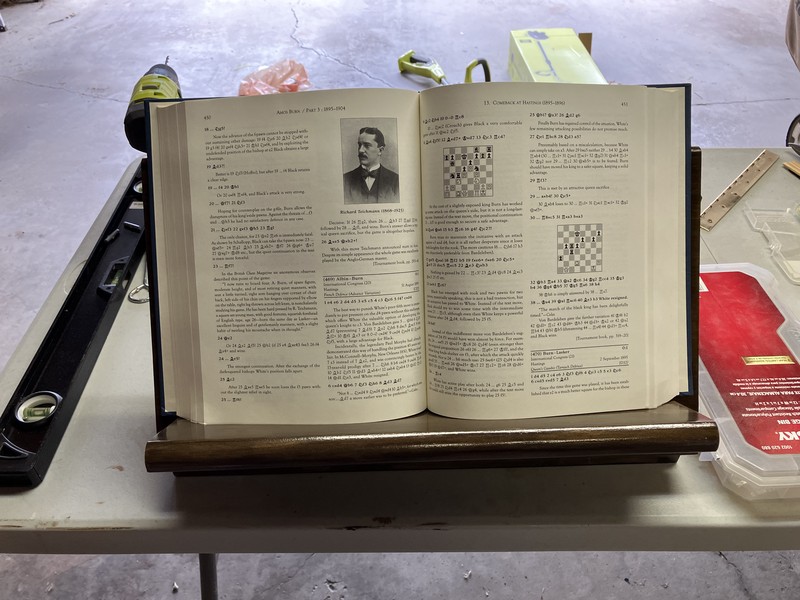
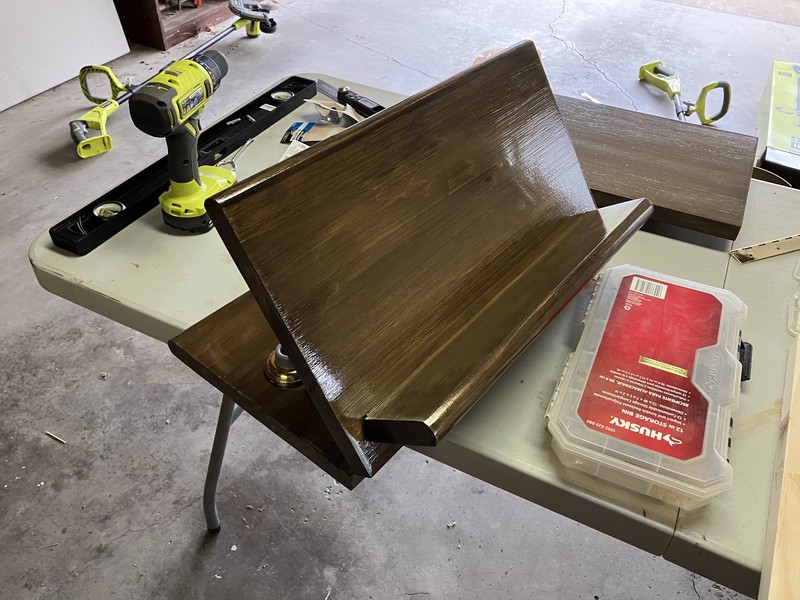
Exploring Chess
I have this dream to create a space where people get interested in the non-ratings non-tournament aspects of chess. The closest thing to it in which I am aware are streaming communities and the Chess Book Collectors group on Facebook. I do not spend a lot of time streaming or watching streamers, and the CBC Facebook group is mostly just good for talking about books, magazines, articles etc...
My new goal, with my blog, is to do the following:
1. Get my "Exploring Chess" website up and going.
2. Maintain my Lichess blog.
3. Write an Exploring Chess book series.
The idea with Exploring Chess is to explore topics deeply, with an emphasis on two types of topics:
1. Simple ideas, explored deeply
2. Common questions about chess (like how to improve as you age?)
Exploring Chess: Passed Pawns
In the past few months I started reading the following books (or parts of these books):
1. My System ~ Aron Nimzovich
2. Understanding Pawn Play in Chess ~ Drazen Marovic
3. Small Steps to Giant Improvement: Mastering Pawn Play in Chess ~ Sam Shankland
4. Small Steps 2 Success: Mastering Passed Pawn Play ~ Sam Shankland
5. A Matter of Endgame Technique ~ Jacob Aagaard
6. Fundamental Chess Endings ~ Muller & Lamprecht
7. Silman's Endgame Course ~ Jeremy SIlman
For the endgame books, I reviewed the parts that deal specifically with passed pawns, so don't think I read each of those cover to cover in just 3 months!
Anyway, if you did not know, here are the main steps taught about handling passed pawns:
1. Create the passed pawn.
2. Guard the square in front of the passed pawn.
3. Push the passed pawn.
4. Repeat until promotion.
This 4-step formula is a very basic understanding of passed pawns, but each step has an extremely fun amount of knowledge to wade through, and this is where I think Exploring Chess will thrive. Let's take a look at what I mean.
Step 1 - Create a Passed Pawn
There are many ways to create a passed pawn.
As you can see, the opponent was given a passed pawn, but this passed pawn cannot simply go promote yet, either. It is a huge advantage, but how does white nurse this advantage into victory?
Step 2 & 3 - Guard the Square in Front of the Passed Pawn & Push it
Here is a fun game I came across where several passed pawns are created, but no one really ever "controls the square in front of the pawn" by literally attacking the square with a piece. This game demonstrates to chess improvers the difference between "attack" and "control" of a square.
More traditional examples show passed pawns being ushered down the board by pieces attacking the square in front of the pawn. But this game demonstrates that isn't always needed. Some people may be intimidated by the number of tactics in this game that aid the pawns moving down the board. However, these are all very basic tactical motifs that are centered around pawns moving down the board. If you go through 500 chess games, you will see each of the themes in this game repeat many times over.
Step 4 - Promotion
Even promotion gets interesting because it doesn't always happen the way you think. For example, there is underpromotion where a promoted pawn turns into a rook, occasionally a knight, and very rarely a bishop. But when I was reading each of these books, I asked myself "Is the purpose of a passed pawn always to promote?"
The answer is no, and I might argue that most passed pawns never get to promote. Chess books focus on promotion, because it is a sure way to win a high percentage of the time. But the thought never actually occurred to me that a passed pawn might have another use (and I made it all the way to master without ever having this thought until recently: that should give you motivation to understand how knowledge gaps affect all players).
The first example I will provide is the previous game: no pawns ever promote! In fact, the pawns seemed to be more useful as attackers like any other piece. The passed g-pawn was a distractor of black's Bishop, which meant the bishop remain on guard duty instead of attacking, and it was then unable to continue to defend the a4-pawn black worked so hard to maintain.
Here is a second example of passed pawns not really being meant for promotion:
You may also like
 CM HGabor
How titled players lie to you
This post is a word of warning for the average club player. As the chess world is becoming increasin… NM RyanVelez
Resigning Strategy
This article is for anyone who wants to understand the strategy of resigning, at both low and high l… Lichess
Accomplished Bangladeshi GM Ziaur Rahman Dies Mid-Game
Lichess extends its condolences to the family, friends, and many fans of GM Ziaur Rahman, who died a… NM RyanVelez
Practical Openings Approach
This post is for people who need to learn openings, but struggle. WFM fla2021
Endgame Tips That Might Change Your Life...Or Not!
In this post you will find some important tips to improve your endgames without having to study that… WFM fla2021