
pixlr.com
A different way of using Spaced-Repetition Learning
It is obvious that spaced-repetition learning has a lot of benefits and makes studying openings easier. But is the way that chessable is using it really the best way of utilizing this new feature? First, we have to see what it does well and understand its shortcomings until we can find a different way of using it.
Advantages of "Chessable Spaced-Repetition"
- Helps to memorize opening lines (especially useful for forced variation)
- Trains you automatically more in the lines that you remember less well
- Rewards you with less work if you do better
- You get a feeling of accomplishment after studying a chapter or doing your daily repetitions
- It is a very concrete thing to do instead of 'looking over your opening pgn file or lichess study' or 'going through a grandmaster game that should serve as a blueprint'
Disadvantages of "Chessable Spaced-Repetition"
- The amount of lines is very large, so people either have to invest a lot of time continuously or are left feeling frustrated and unaccomplished
- Repetition is required over a large amount of time and requires a long-term investment
- Although courses vary in their explanations, in many instances, people complain that they don't fully understand a certain idea or that they are left with a position they know an evaluation of but don't know how to play
- The lines are often aimed for high-level titled-player-strength games which are unsuitable for the vast majority of chess players
A different approach to Spaced-Repetition
While many people have gotten good results with the opening courses from chessable, I feel like the amount of time needed to invest into studying an opening course is unproportional to the time that I am able to allocate to other parts of the game (strategy, tactics, endgames,...). And even after having spend so much time on the opening, feeling like I am ready, my opponent leaves theory early or plays an entirely different system where all the time invested does not actually pay off. True, I have had quick successes due to the opening theory learned, but they have been rare. Most of the time, the small advantage or nicer position I get out of the opening still requires much skill to handle and convert to a win.
The skills to convert good position or just play regular middlegame and endgame position is not acquired by studying openings but studying other parts of the game. While people that focus solely on chess might have the time to do both, for me and many adult improvers there simply is no time if one has to memorise many 100 moves everyday. Often seen blogger Avetik Gergorian in his blogon Chessmood writes how openings should take up a maximum of 33% of all study for most. How is that realistic when one has to do so much for chessable? And he is not alone, many others condemm the pure focus on openings as do I.
So what is the new approach I am suggesting? It would be a waste to discard spaced-repetition learning on the basis of the above-mentioned. But, we can use it in another way. I have found that studying something like 2700 lines for the Kings-Indian (Lifetime Repertoire by Gawain Jones) just is not doable for me. But studying 120 lines is. Now you may ask how can a 2700 line repertoire be compressed into a 120 line repertoire? Not without concessions. In many lines however what counts are the ideas and once you learn the idea it may not be necessary to memorise all the lines but you might be able to recognise the pattern in a game and apply it anyway.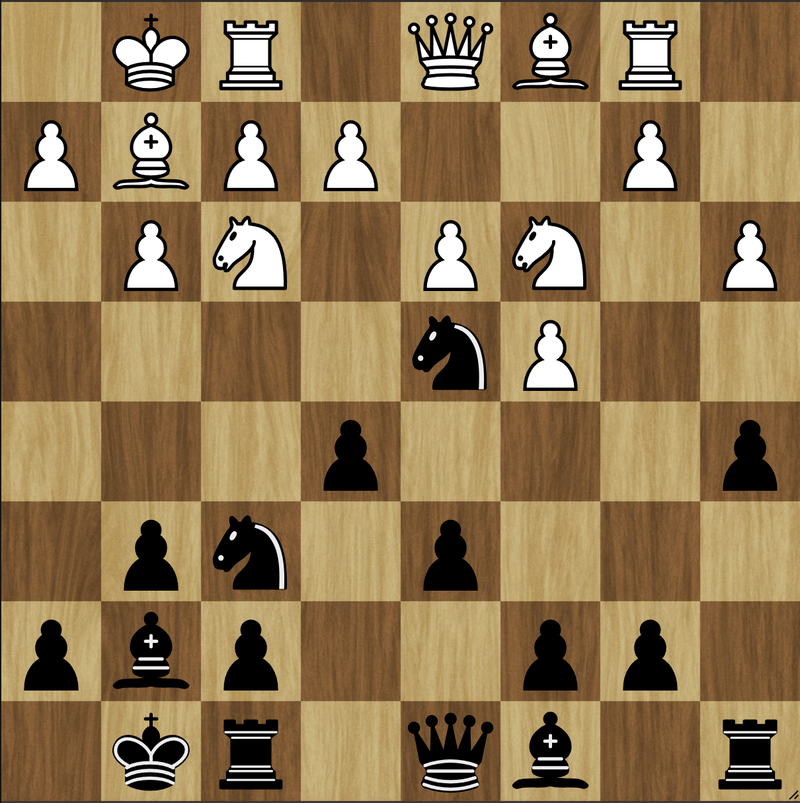
Black has just played 9...Nd4 with the idea to take up space in the center, play c6 potentially put pressure on f3 and e2. Is it really necessary for someone with a 1950 FIDE rating to memorise all the different captures, changes in pawn structure in each variation coming thereafter? I don't think so. It is much more practical to unerstand how to reach the tabyia and what the ideas behind the move are. Whether my opponent finds the correct reply (of which there are many) or makes a mistake, I have enough knowledge of the position by knowing what black's main ideas are to apply those and ask why my opponents move makes sense or doesn't.
Of course it would be great to whip out more preperation here but the time invested is not linearly correlated with the advantage gained. I can study this tabyia and memorise around 10 lines which would cost me 5 minutes and have a pretty good idea of the position and be able to play it. Not perfectly but well. I could also study 100 lines which would take me minutes (probably more because I would make more mistakes, but let's assume 50 minutes for the sake of it) and I would be able to whip out a couple more moves of theory to most of the things my opponent can do but still end up on my own after a while (granting my opponent follows theory, which in my experience they rarely do). And whether I end up on my own after 10 moves or 13-15, the game has just begun and my knowledge of middlegames, strategy and tactics becomes far more valueable than the opening theory I have learned.
So it seems to me to be a better investment to study 5 minutes of opening theory (or more than just one opening, considering that this is just ONE LINE that can appear on the board which, by looking at master games, appeared only 278 times out of 2,5 million games played!!!) and spend 45 minutes on tactics and strategy instead of 50min purely on opening theory. Yes, of course you can also study 90 minutes in total and do 50 minutes of openings and 40 minutes of tactics and strategy, but I hope that my main idea is clear. The first approach seemed much more balanced and flexible than the second one.
So what should I study with Spaced-Repetition?
Going back to example above: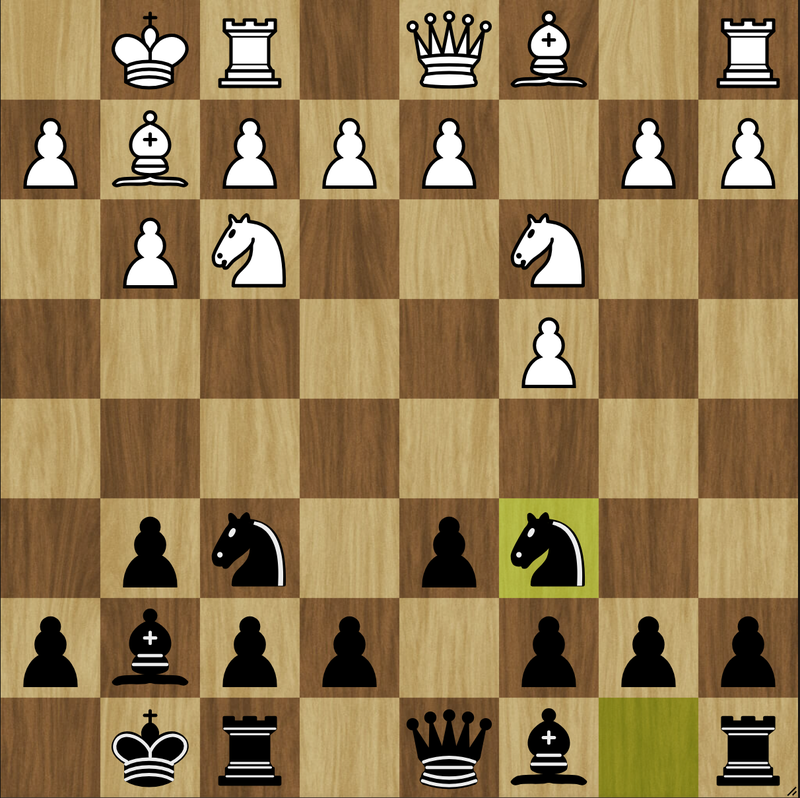
This is the main position that is reached from the English Fianchetto against the Kings-Indian setup (if you chose to play the particular black setup). From here the mainline follows with 7.d3 e5 8.Rb1 a5 9.a3 and here I chose to go for the 9...Nd4 setup but there are different options. I now recommend to have a couple of lines with the main ideas after 9...Nd4 but not unnecessary variations of it. Just so many lines that you can remember the idea behind the move. Like what happens after 10.Nxd4 in most cases and what happens after 10.b4. Also include some lines for previous variations that are popular (like 7.d4 or 7.d3 e5 8.e4!?). Then after studying these with spaced-repetition play them in your games and extend the lines if you feel like you understand the first concepts or add lines if you struggle against certain replies. This way your opening file stays small and managable, but up to date and involves a constant revision process in which you not only memorise but understand the ideas through constant engagement.
Another example is the advanced french with Qb6, which is a highly strategic opening.
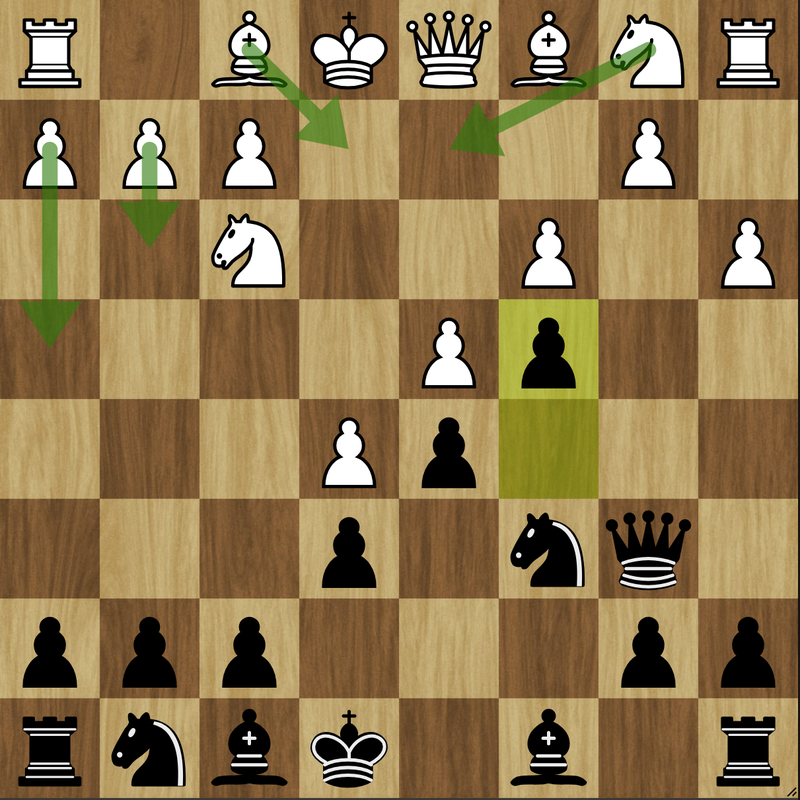
In this position there are 3 main plans for White. Those include the g3-h4 advance with an attack on the kingside: a g3 setup where the Bishop is played to h3; Be2 setups with calmer play. While you can memorise all the different move orders, it seems much more important and much more practical to me to study the main ideas, and what black is to do against them. So instead of 30-40 lines you could just have 10 and understand the opening almost as well.
While this does not give you the bullet-proof repertoire that you get out of a chessable course, it makes you much more flexible, less dependent on your opponent playing theory and able to study other parts of the game which is more desirable long-term.
Important Notes
- As you climb the rating ladder you will have to add more and deeper lines to your opening files
- Spaced-Repetition learning is still incredibly valueable for forced variation that occur in certain openings and must be memorised
- Learning the ideas of the opening by spaced repetition may leave you unprepared in certain instances but that should be compensated by more middlegame and endgame study
- This post is aimed at people from 1000 onwards (or when you start studying openings)
- If you are not a big fan of memorisations like me, this method allows you to still be prepared while having more time to focus on the more enjoyable aspects of chess
- If you don't want to use a chessable course but build your own opening repertoire there are many websites that allow you to do spaced-repetition by importing a pgn like studyopenings.com, chesstempo.com, or own chessable itself with an own opening repertoire
You may also like
 GM NoelStuder
Adjusting Difficulty for Optimal Chess Improvement
A couple of years ago I talked to a seemingly very talented player, who invested a lot of time in ch… IM datajunkie
#29: The 14 Rules of Hedgehog Club
Welcome to Hedgehog Club. The first rule of Hedgehog Club is: you do not talk about Hedgehog Club. GM Craze
The Berlin vs. 1.d4
What is the equivalent of the Berlin Defence against 1.d4? Discover it here :) GM NoelStuder
How To Think During A Chess Game
Today, I will teach you how to think during a Chess game. Most students draw a blank when I ask them… NM RyanVelez
Layered Analysis
What is the purpose of going over games? NDpatzer