
doubao.com
English Opening
Opening Insights: Chess Openings Series
Hi, I am Jason! Today, I'll talk about English Opening.
The next blog is Zukertort Opening!
What kind of opening do you like best? Tell me in this post-forum!!!
The English Opening
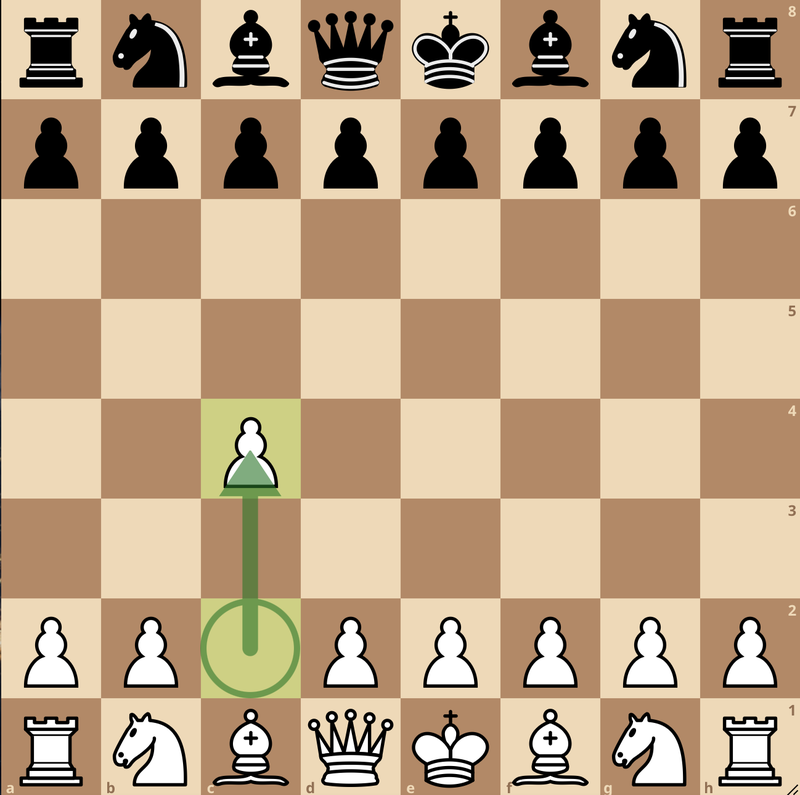
The English Opening is one of the most flexible and artistic openings in chess. It is marked by White's first move of 1.c4. It falls into the category of the "Hypermodern Opening", emphasizing the construction of the position by controlling the center rather than directly occupying it. It got its name because it was widely used by British chess players in history. Its core charm lies in its flexibility - White avoids defining the central structure too early and instead adjusts the plan dynamically according to Black's response. It is suitable for players who focus on understanding the position and strategic planning.
Origin and History
The embryonic form of the English Opening can be traced back to the 19th century, but it was not until the early 20th century that it was truly systematized and became popular. The early exploration of 1.c4 by the British chess player Howard Staunton laid the foundation for it. In the 20th century, hypermodern chess players (such as Alekhine and Réti) further developed its strategic concept - that is, to indirectly control the center (d5, e5) through flank pawn advances (c4) and piece maneuvers (such as Nf3, Nc3, g3), rather than directly occupying the center with e4 or d4.
In the mid - late 20th century, with the deepening of players' understanding of the position, the English Opening gradually became a regular in top - level tournaments. World champions such as Kasparov and Carlsen have used it in key games, making it a classic opening with both practical value and theoretical depth.
Basic characteristics and core ideas
1.Definition of the opening
The white side's first move is 1.c4 (advancing the queenside pawn one square forward), with the goals of:
- Controlling the key central square d5 (indirectly restricting the black side from advancing on d5);
- Opening up space for the development of the queenside pieces (such as the b1-knight and c1-bishop);
- Maintaining flexibility in the center and avoiding getting locked into a fixed structure too early (like the closed or semi - closed positions resulting from 1.e4 or 1.d4).
2. Differences from Other Opening
- Classical Openings (such as 1.e4/d4):
Directly occupy the center, and the position structure is relatively fixed; - Hypermodern Openings (such as the Réti Opening 1.Nf3):
They belong to the "control flow" together with the English Opening. However, the Réti Opening starts with a piece (Nf3), while the English Opening starts with a pawn (c4), and it focuses more on the advance of the queenside pawn; - Flank Openings (such as 1.b3):
The c4 in the English Opening more directly aims at central control, while b3 is more for developing the bishop.
3.Core Strategy
- Flexible Adaptation:
The White side adjusts its central plan (such as playing d4, e4 later or maintaining piece coordination) according to the Black side's responses (such as Black playing c5, Nf6, e6, g6, etc.); - Piece Coordination:
Through maneuvers like Nc3, Nf3, Be2/g2, 0 - 0, etc., build piece inter - linkage, preparing for a central breakthrough or flank expansion; - Space Contest:
Use the advance of the c4 pawn to create space on the queenside while restricting the development of the Black side on the queenside.
Main Variations
Black has various responses to 1.c4, and different responses can lead to completely different position structures. The following are several of the most common variations:
1. Symmetrical Variation: 1.c4 c5
Black mimicking White in advancing the c - pawn to form a symmetrical structure is the most straightforward response.
- White's plan: Break the symmetry and create central or flank advantages through the mobilization of pieces. Common continuations:
- 2.Nc3 (control d5 and support the subsequent d4 breakthrough);
- 2.Nf3 (develop the kingside pieces and prepare for e4 or d4);
- 2.g3 (deploy the bishop to g2, build a kingside fortress, and potentially play d3, Nf3, 0 - 0 later).
- Black's Response: Develop pieces in the same way (such as Nc6, Nf6, e6, d6), or counterattack on the queenside through a6 and b5 to fight for the control of the c4 pawn.
- Crucial Points: White often seeks to advance e4 (such as Nf3e4) or break through d4 (such as after c4+c5 exchange and then play d4). Black needs to be vigilant against White taking control of the center.
2. Indian Defenses: 1.c4 Nf6
Black moves the knight on the kingside, preparing to build the Kingside Indian Defense structure with d6+g6. It is one of the most popular responses in modern times.
- Common continuations for White:
- 2.Nc3 (supporting d4 and controlling e5);
- 2.d4 (directly transposing into the Queen's Pawn Opening, such as the "Indian Defense" in 1.d4 Nf6 2.c4, but White defines the center first);
- 2.g3 (the Fianchetto system: g3Bg20-0, retaining the option to advance d4 and having more flexible piece coordination).
- Typical structure:
- If White plays 2.g3, Black may respond with 2...g6 (3.Bg2 Bg7 4.Nf3 0-0 5.0-0 d6), forming the "English Fianchetto Variation". Both sides fight for the central squares d5 and e4. White may break through via e4 or d4, while Black may counterattack on e5 or c5.
Strategic Core and Key Techniques
1. The "indirectness" of the central struggle
The core of the English Opening is "control rather than occupation": White is not in a hurry to play d4 or e4. Instead, through moves such as c4, Nc3, Nf3, and Bg2, White restricts Black's expansion in the center (for example, preventing d5 or e5). After the pieces are coordinated, White breaks through with d4 or e4. For example:
- In the Symmetrical Variation, White may play e3Nge2d4, or g3Bg2e4 to break the symmetry.
- In the Indian Variation, White often advances with Nf3e4, or opens the line with d4cxd5.
2. Prioritize the coordination of pieces
The white side needs to ensure the coordination between the pieces (especially knights and bishops) and the pawn structure:
- Knights are usually placed on c3 (controlling d5) and f3 (controlling e5);
- The placement of bishops is flexible: they can be developed to g2 (the king - side bishop, controlling the long diagonal) or e2 (protecting the center and reserving the right to castle kingside);
- The activity of rooks: mobilize through open files (such as the c - file and d - file) to support flank breakthroughs.
3. Balance between the Queen's Wing and the King's Wing
In the English Opening, White needs to take care of both wings:
- Queen's Wing: Utilize the advantage of the c4 pawn. There may be expansions like b3Bb2, a3b4, or open the c-file through cxd5;
- King's Wing: Consolidate the defense through g3Bg2, 0-0, and launch an attack with f4e5 if necessary.
Avoid over-committing on one side, which may lead to the vulnerability of the other side.
Applicable People and Classic Cases
1. Types of players suitable
- Players who are good at understanding the position rather than pure tactical attacks and defenses;
- Players who like to adapt flexibly and adjust their plans according to their opponents' choices;
- Players who hope to avoid their opponents' common opening preparations (such as the fixed routines of 1.e4/e5 or 1.d4/d5).
2. Examples of Classic Matches
- Kasparov vs Karpov (Game 16 of the 1985 World Championship): Kasparov opened with 1.c4, and through flexible transitions in the symmetrical variation, he eventually won in a complex endgame.
- Carlsen vs Anand (Game 5 of the 2013 World Championship:) Carlsen used the 1.c4 Nf6 2.g3 system, and with precise central breakthroughs and piece coordination, he secured crucial points.
- Fischer vs Spassky (The "Match of the Century" in 1972): Fischer repeatedly responded with the English Opening, demonstrating his profound understanding of hypermodern strategies.
Summary
The English Opening (1.c4) is a classic example of "overcoming strength with softness" in chess. Instead of directly occupying the center, it provides players with broad strategic space through flexible piece mobilization and indirect control. It has rich variations and is suitable for both top - level players to hide their preparations in major competitions and for intermediate players to improve their sense of the position. However, it should be noted that it requires a relatively high "ability to formulate plans". Beginners need to avoid being overly passive or having their pieces disjointed, and they need to continuously accumulate experience in grasping the timing of central breakthroughs and piece coordination in practice.
Mastering the English Opening essentially means mastering the art of "dynamic balance" - finding the optimal solution between control and flexibility, which is also the core of the strategic charm of chess.
Okay, that's all.
If you like, please click the heart shape!
You can also read my other blogs!
Have a good day!!!!
You may also like
 Chejason
Van't Kruijs Opening & Hungarian Opening
Opening Insights: Chess Openings Series Chejason
The Queen's Pawn Opening: The Solid Strategic Foundation in Chess
Opening Insights: Chess Openings Series jk_182
Identifying the Style of Different Players
Automatically categorising players into play styles FM ChessisEternal
From 1400 to 1800: Chess Training Guide
Jumping from a 1400 rating to 1800 isn’t magic, luck, or the result of sleeping with a chess book un… Chejason
Zukertort Opening
Opening Insights: Chess Openings Series FM Linesman39