
Comments on https://lichess.org/@/ndpatzer/blog/science-of-chess-finding-chess-expertise-in-the-brain-a-case-study/kYZy0JHP

Seriously interesting. But I look forward to reading the blog and the references I will be able to find. I was curious about the extent of neurobiological connectivity there was in the chess cognitive science topic. I will take my time.
And the reluctant stance from the begginning given a twist or critical touch to the exposition. I should say while I am curious about the current state of such connection, I also am critical (of pretty much anything it seems....).
I think all angles should be useful from the had-hoc model that is explanatory given all the explicit and implicit assumptions so far with all the experimental protocols that stem from those models and or are still explaning of such experimental results, to the neuro-anatomical mapping attempts using fMRI (and whatever dynamic and spatial (anatomical) resolution they may now have while still having to lye down with big magnet and still-head constraints).
Not forgetting neurophysiology of the brain beyond blood flow mapping. Plus now if AI could get its head out of it linguistic cavity, and go spatial (like A0 and LC0 types of world view thought-through encoding of the real problem at hand, not how we talk about it between us, for example).
So, I loolk forward seeing how you sift through that, with your healthy skepticism shared.. Good way to keep us awake through the reading......
Seriously interesting. But I look forward to reading the blog and the references I will be able to find. I was curious about the extent of neurobiological connectivity there was in the chess cognitive science topic. I will take my time.
And the reluctant stance from the begginning given a twist or critical touch to the exposition. I should say while I am curious about the current state of such connection, I also am critical (of pretty much anything it seems....).
I think all angles should be useful from the had-hoc model that is explanatory given all the explicit and implicit assumptions so far with all the experimental protocols that stem from those models and or are still explaning of such experimental results, to the neuro-anatomical mapping attempts using fMRI (and whatever dynamic and spatial (anatomical) resolution they may now have while still having to lye down with big magnet and still-head constraints).
Not forgetting neurophysiology of the brain beyond blood flow mapping. Plus now if AI could get its head out of it linguistic cavity, and go spatial (like A0 and LC0 types of world view thought-through encoding of the real problem at hand, not how we talk about it between us, for example).
So, I loolk forward seeing how you sift through that, with your healthy skepticism shared.. Good way to keep us awake through the reading......
<Comment deleted by user>
cool sharing... do you a metal pin in the occipital?
https://i.postimg.cc/3J6JzTBJ/screenshot-2024-08-13-at-16-12-43.png
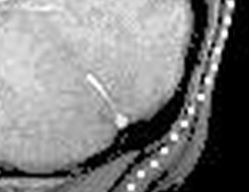
I am very coarse about neuro-anatomy. It just looks like some visual outlier segmentable thing in the ambient surrounding 2D texture...
cool sharing... do you a metal pin in the occipital?
https://i.postimg.cc/3J6JzTBJ/screenshot-2024-08-13-at-16-12-43.png
I am very coarse about neuro-anatomy. It just looks like some visual outlier segmentable thing in the ambient surrounding 2D texture...
What do we get out of studying the brain directly that we couldn't get by other means?
Good question. I agree. Keep explicit the common goal or make it so, would help in answering such questions, and I find it good teaching point (in any science). I am not sure however that we can exclude that one might not know what they don't know.
And that surprises may come from where we don'T know, a priori (:). So, it is good that you can offer us such discussion.
I wish I could double delete my post which are my reading crutch by journalling my impulsive stimulated reactions upon advancing in the blog. That way, it would be the scaffold that it is, and no one would have to suffer thinking it might be worth reading.. For me it is worth writing. I think keep in mind the reasearch or scientifc goal might be what I agree with.
> What do we get out of studying the brain directly that we couldn't get by other means?
Good question. I agree. Keep explicit the common goal or make it so, would help in answering such questions, and I find it good teaching point (in any science). I am not sure however that we can exclude that one might not know what they don't know.
And that surprises may come from where we don'T know, a priori (:). So, it is good that you can offer us such discussion.
I wish I could double delete my post which are my reading crutch by journalling my impulsive stimulated reactions upon advancing in the blog. That way, it would be the scaffold that it is, and no one would have to suffer thinking it might be worth reading.. For me it is worth writing. I think keep in mind the reasearch or scientifc goal might be what I agree with.
<Comment deleted by user>
<Comment deleted by user>
@dboing said in #4:
cool sharing... do you a metal pin in the occipital?
I am very coarse about neuro-anatomy. It just looks like some visual outlier segmentable thing in the ambient surrounding 2D texture...
Nope. That's just an imaging artifact.
@dboing said in #4:
> cool sharing... do you a metal pin in the occipital?
>
>
>
> I am very coarse about neuro-anatomy. It just looks like some visual outlier segmentable thing in the ambient surrounding 2D texture...
Nope. That's just an imaging artifact.
<Comment deleted by user>
@NDpatzer said in #8:
Nope. That's just an imaging artifact.
ok. gives some notion of how to look at things (with prior knowledge, I bet).
@NDpatzer said in #8:
> Nope. That's just an imaging artifact.
ok. gives some notion of how to look at things (with prior knowledge, I bet).