
Created with DALL-E
Rise, Learn, Triumph: Journey to 1800+ Chess Rating
IMPROVE IN CHESSHello guys, Allen here! Hope y’all are doing great. I write an email newsletter asdmagazine.substack.com on chess. Feel free to check it out and consider subscribing to my newsletter to get articles like these. Follow me on twitter Allen to get updated with the latest chess news. Hope you enjoy this article. Happy reading!!
Today, I will be sharing you my knowledge, insights and what I learned along my chess journey. I’ve designed this article in such a way that it’s of most use to people with a rating of around 1400-1500. Incase you find this article a bit advanced, I suggest you to read the article “Cracking the 1200 code” before coming here.
Please keep in mind that it took me 7 years to learn whatever I’m gonna share. So it’s unlikely that you’re gonna master it in a single night. It’s gonna take time depending on your current level. If you are a newbie, it’s gonna take at least 2.5 years and if you are more on the intermediate side, you can get there a lot quicker. And most importantly, no matter how much I teach you, it’s never gonna be enough unless and until you learn it.
1. Know basic openings, don’t rely on traps
If you are somewhere in the 1400-1500 range, it’s about right time that you start learning basic openings. When i was in that level, I did not know a single opening. What I mean is that I knew some openings, but I was relying 99% on opening traps. For example, whenever I play black and if white plays the Italian opening, I went for 3..Nd4 relying on 4. Nxe5... unbelievable, right?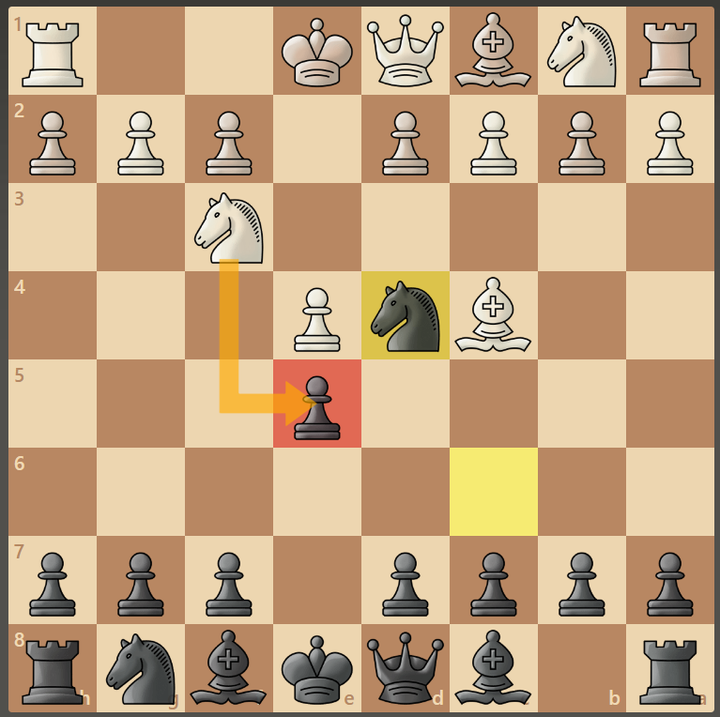
(The opening I was talking about)
It worked out very well when I was a beginner (1000-1200). But once my rating touched 1350, that was the end of it. I never improved since then, and it took me nearly 8 months to realize how bad my opening was. How did I realize this? I watched the live online games between two 1500s and compared my moves with theirs. My endgame was ok, middlegame was decent and tactics was awesome. But my opening.... terrible!!! Once I had a good repertoire for both sides, I could see my rating shooting up. I’ve attached my rating graph for your reference. This is my profile incase you want to analyze it deeper (Allen's profile).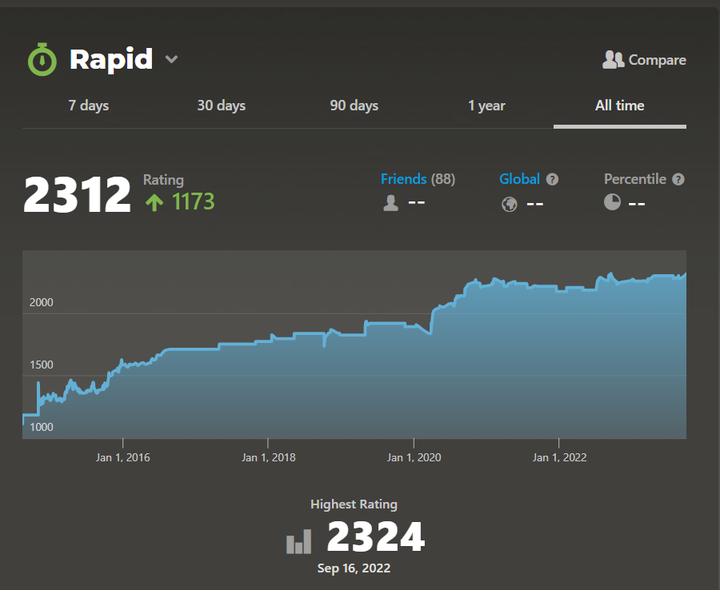
(My rating progress graph)
And most importantly, don’t make the mistake of learning high-level openings like Ruy-Lopez, Sicilian-Najdorf etc. Learn gambits, they are fun. Openings like Danish gambit, Bishop’s opening, four-knights, Evans’ gambit, king’s gambit, Max-Lange attack, Alapin sicilian, exchange-french, Benko gambit, Queen’s gambit declined, King’s Indian defense, Grunfeld defense are very good choices. I’ve mentioned some good and very interesting openings. Some of them are a bit-high level and requires high memory and positional understanding. So choose your openings depending on your current level and style of play.
2. Improve your Tactical Knowledge
This is very important!! Practice a whole lot of tactics. Don’t just solve them, learn them. Learn the pattern involved in it. Pattern recognition is super important. Understanding the patterns is more important than actually solving because, pattern recognition is what rings you the bell in a real game. It’s highly unlikely that the same position repeats in your game, but patterns though... they are much more common in games.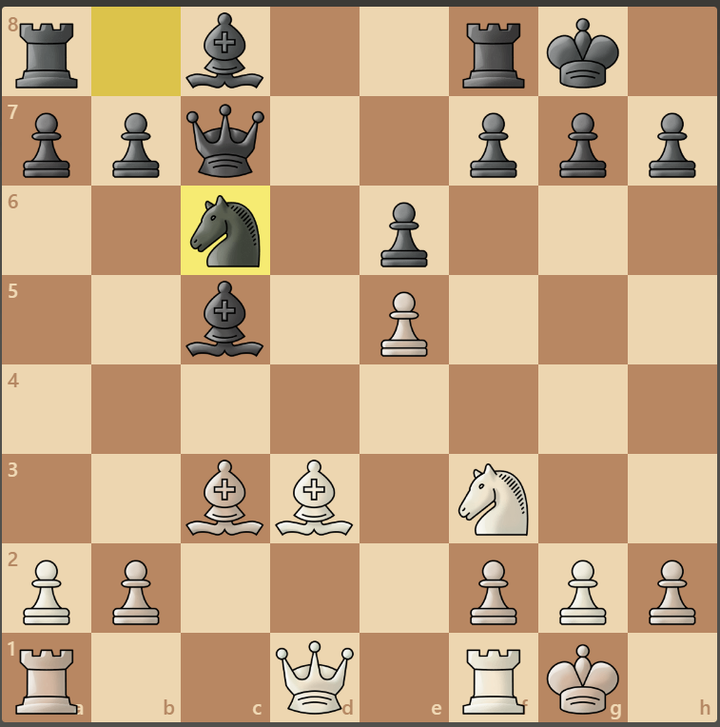
(I had this position in one of my games)
A good example for this is the “Greek gift”. If you have a bishop along b1-h7 diagonal, a knight that can jump to g5, queen that stares at the d1-h5 diagonal, no defenders like knight or queen and opponent’s pawns on the 7th rank, it usually is a good indication for “Greek gift”. This is what you call pattern recognition. Practice tactics involving sacrifices, en-passant, knight forks, decoys, x-rays, zugzwang, under-promotion, zwischenzug, skewers, interference, queen and bishop battery, queen and rook battery etc. There are tons of it left. But there are some of the many that came to my mind.
3. Have a sound endgame knowledge
If you are in 1400-1500, you must be knowing stuff like checkmating with a queen, rook, queen vs bishop, queen vs knight. Now it’s time to step up. If you want to reach 1800+ level, you will have to learn and understanding much more complicated endgames. And most importantly, as much as you know how to win, it’s super important to know how to defend. You’ll have to learn the art of defending as well, it’s very important!!!
Endgames that you should convert as well as defend—
- 4 pawns vs 2 pawns —— (Not defendable in 95% of the times)
- Rook vs Knight
- Rook vs Bishop
- Rook+2 pawns vs Rook —— (Vancura position)
- Rook+pawn vs Rook —— (Building a bridge + Vancura position)
- 2 Bishops vs Rook
- Bishop+Knight vs Rook
- 2 Knights vs Rook
- Rook vs Knight+pawn
- Rook vs Bishop+pawn
- Queen vs Rook+2 pawns —— (Fortress)
- Queen vs Rook+Knight
- Queen vs Rook+Bishop
How do you practice, set this position and play with a +200 rating chess computer if you are trying to win and with a -100 rating chess computer if you are trying to defend. As you keep getting better, increase the rating slowly (especially for defending). You’ll be amazed at how much you have improved.
(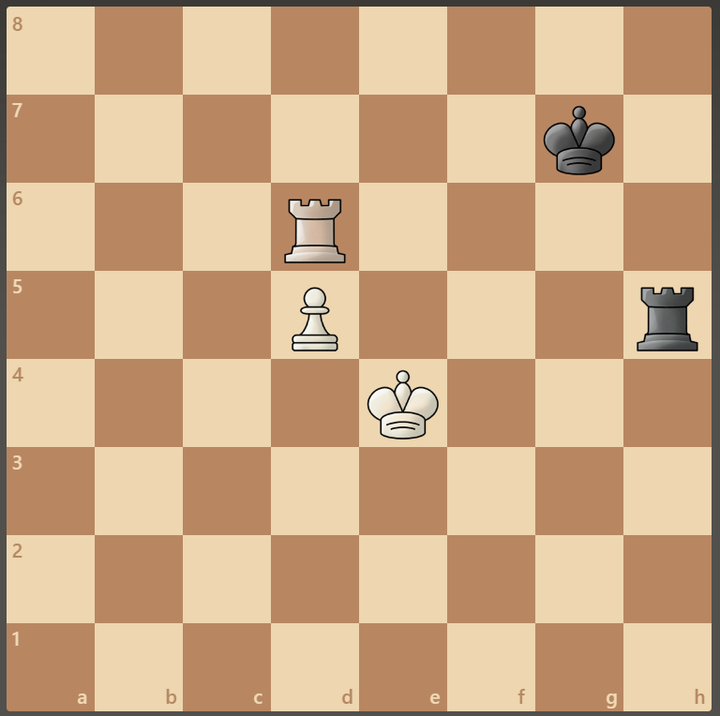
(Draw this with black and win this with white and whichever side you choose plays first)
4. Play your game, rating doesn’t matter
Play your game every single time! Most of us get tensed or panic when we encounter opponents who are much higher-rated compared to us (like +200). We get into panic mode and compromise our play. When I was young, I used to deliberately go for exchanges and try to secure a draw. I always thought that my opponents would outplay me and that I had a better chance of drawing the game if we had lesser pieces on board.
This was so stupid of me. If you encounter higher-rated players, don’t panic. Instead, us it as an opportunity to scale your level with theirs. Play your best, it’s totally fine to lose. Because that is when you learn something new. You played your best and still, you lost. Which means you are lagging somewhere and use that as an opportunity to work on your weaknesses.
5. Know your strengths, identify your weaknesses
I’ll tell you something, it can change the way you look at ratings forever. Rating is a measure of how good your overall chess is compared to others. Most of the times, in amateur levels, we have some strong and weak points. And sometimes it so happens that your opponent’s strong point is your weak-point. And if the game takes a direction into his strengths, you lose.
I’ll give you an example. You play and white and he plays black. You are good at almost everything, but you are bad at defending. On the other hand, your opponent is a very good attacking player, but is not a good player overall. If you play a King’s Indian defense, he’s gonna win you more times than not.
So the way you identify your weakness is by analyzing your games. If you have analyzed every game you played deep enough, you will start recognizing your weakness! It’s more like a pattern. We all have weakness, I’m not good in defending king-side attacks. So how do you work on those? One way of doing it is to take the exact position you felt most uncomfortable with, play it with an engine -100 your rating. Practice it again and again. You will get better!!!
6. Understand your style
Know your playing style. It’s very important. Know if you’re an attacker, defender, positional player etc. This is very crucial when it comes to selecting your openings. To be honest, most of us will not be able to identify/know our style. I recommend you to consider your strengths as your style. Ruy-Lopez will be a good fit for someone who plays positionally and is good maneuvering. KID is a perfect fit for an aggressive and attacking player.
This is very important if you are serious about the game. You can get to 1700 without even understanding your style, but to really push to 2000, you’ll have to do this. If you still struggle, with this, a simple way is to look at your games that you have won cleanly (with accuracy ~70-80%). Analyze them and know the type of positions you thrive in. If you are good in closed positions, you are most probably a defensive and positional player.
7. Think twice when moving a pawn
If you have mastered the above points, you are most likely nearing 1700. Congratulations, and keep up the pace. By the time you are done with this article, beating 1800 will not be a problem to you. Back to the article... “Think twice when moving a pawn”. This is super important!! Pawns cannot go backwards, once moved they have to stay there for the rest of the game.
You never want to overextend your pawns. The problem and risk with overextending is that, either you expose yourself for a deadly attack or the pawn chains falls and you lose a lot of pawns. Never run the risk of over-committing your pawns. Pawns are the soul of chess. As pawns are the least valuable piece is chess, they can take multiple roles. They can attack pieces, they can take space, they act as good blockaders, they can be sacrificed for counterplay etc. Respect pawns!!!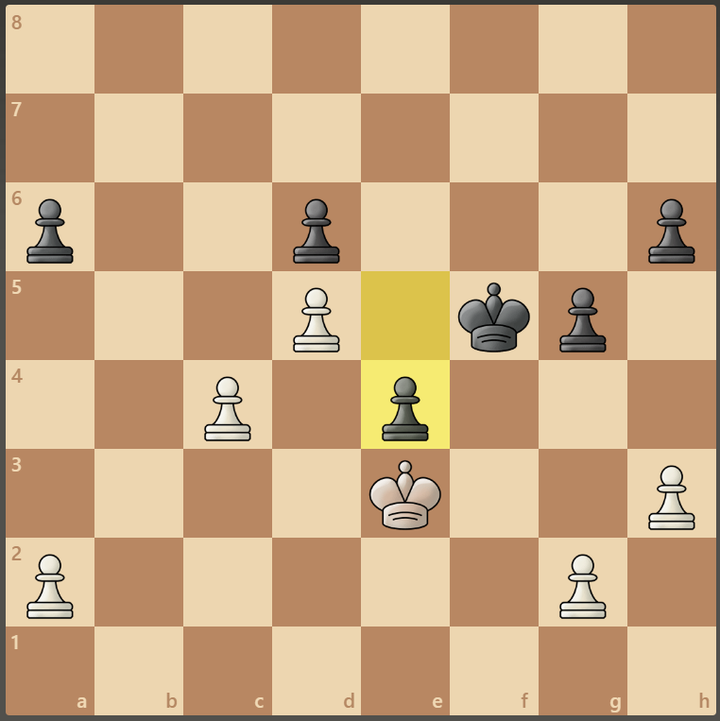
(A serious commitment by black. Black is lost. A case of overextending pawns in chess)
8. Become resilient
You wanna know the difference between a 1700 and 1900? 1900 are super resilient, mentally strong, patient and tough. That really is the difference. There is not much difference in the level of play between a 1700 and a 1900. But their mental strength and resilience, that’s the key factor here. How to you develop this? Defend tough positions. The only way you can defend, is by beating your opponent’s patience and being more resourceful.
How do you become resourceful? Simple, take a game that you have lost. Take the most critical part of the game and continue the game from there with a chess engine of 2000 rating from there. You play it from the better side and let the engine defend it. You will amazed at how resilient and resourceful the engine is.
Then, switch sides and try defending the position with the same engine. You will be shocked at how easily it crushes you. Learn from engines and keep building that knowledge. One easy way to improve is to see how the computer defends a position and using the same defense to see how it attacks. You get more resourceful and resilient without even knowing.
9. Be patient
As you get stronger, you’re not gonna get quick wins. Your opponents are not gonna sit there and watch you win a smooth game. They will make your life harder. Yes, as you improve, your opponents are also gonna be stronger making them a tough nut to crack. As you get closer to 1800, the games you win easily by tactics are gonna reduce significantly. You’ll have to win it in a long grind.
The positions will be more or less equal and you have to be good in positional play, maneuvering and rerouting. Yes, you have to develop patience, the more patient you are, the better will be your results. Never lose your patience, you will have to sit, break your head, be more resourceful and creative than your opponent to win at this level. The one who loses patience tends to make mistake.
Points 8 and 9 should go in hand. To be resilient, you have to develop patience. This can only come with practice. Play more number of games in 15min+10secs time format. Be mentally strong, don’t crumble under pressure. It is something that you have to work upon once you cross 1700. This is a game-changer, trust me!
10. Convert winning positions
#### “The hardest game to win is a won game”. - Emmanuel Lasker
A beautiful quote. And that really is the truth. How many times have you converted winning positions into a win? This is where you mental strength comes into play. Converting winning positions is not hard, it’s just as easy as getting a winning advantage. Know one thing, if you could bring it that far from the scratch, isn’t converting it relatively simple.
Our brain tends to relax once we get a winning advantage. What we fail to realize is that, when we are winning, that is when the opponent’s brain is gonna function at it’s peak. So technically, it becomes a battle between a relaxed brain and a well-functioning brain. Which is why we fail to convert winning positions most of the times. It could also mean that you are not resourceful enough to overcome your opponent’s tough defensive setup. If you are not able to convert wins, try playing it out with engines and build your weak points from there.
Conclusion
These are some of the things that I learned in my journey. If you are all able to successfully master the first 7 points, well done! You are almost 1800 at this point. What about the last 3 points? These points are the reason why I am 2300 in rapid chess. Of course, there is a lot to learn, but these 3 points are absolute game-changers. The better you are at it, the stronger you are. Since the article is too big, I couldn’t elaborate it. I will dedicate a separate article on building mental strength, patience and resilience in the future.
I will be releasing courses on mastering endgames, openings and becoming a mastermind of middlegames in the future. Hope you enjoyed this article and found it worthwhile. Consider liking this post if you genuinely liked it. Leave your thoughts down in the comments section. If you want to read articles like these, feel free to check out my chess magazine ***asdmagazine.substack.com***and subscribe to this chess magazine to get notified whenever I release an article and share this chess magazine to your friends. I will see you in my next article.
Signing off— Allen.


