Development
"Development" refers to improving a chess piece at the beginning of a game, generally by opening its way towards the center of the board and possibly bringing it out towards the center of the board. The "big pieces" on the back row begin the game in a very limited state, mostly unable to move or unable to move to many different places. A good player will develop them quickly.
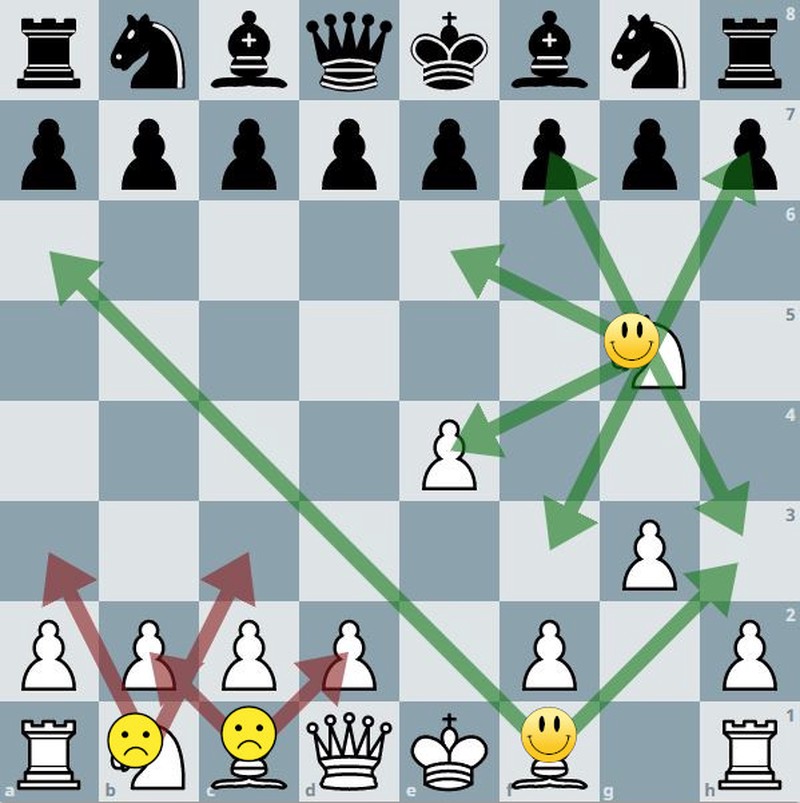
Different pieces are often developed in different ways. Knights and Bishops usually come into the game as quickly as possible. Conversely, bringing Queens and Rooks out too quickly can cause problems as they are vulnerable to less valuable pieces. They are often "developed" on the back row by removing the pawns in their way. At the beginning of the game Kings want safety, not mobility, instead of developing they will castle. Pawns movements only count for development if they let another piece out as moving a pawn doesn't necessarily give it more possibilities than it had before.
Development can become like a race between the two players. If one player quickly gets all of their pieces into the game while the other doesn't they may find themselves overwhelmed. Often it can even be worth sacrificing pieces in order to rapidly develop the others.
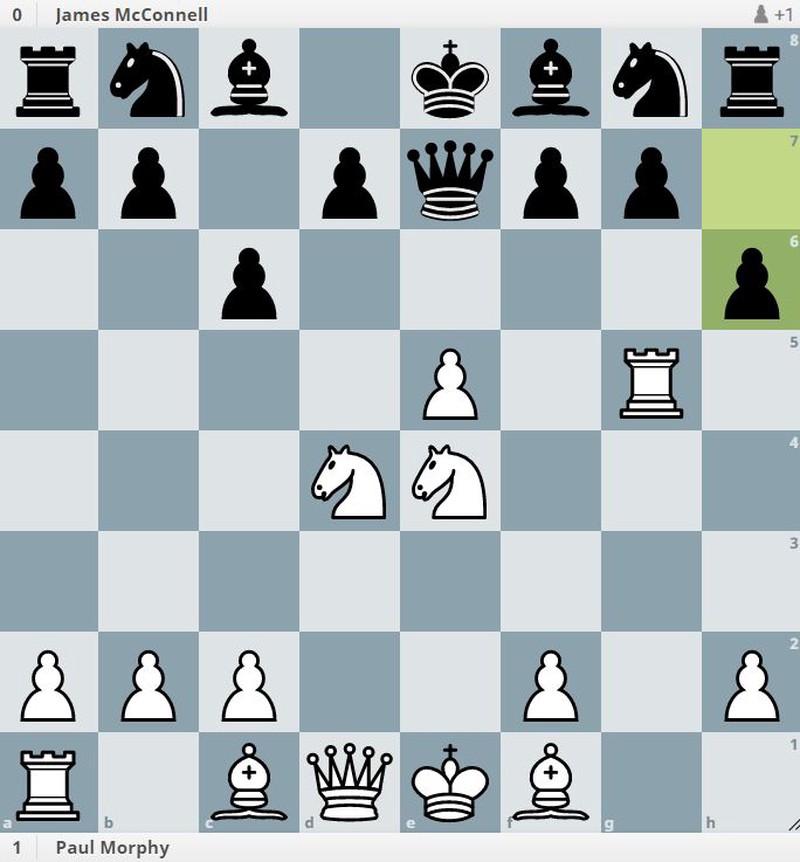
Legendary Player Paul Morphy understood the importance of development. In the following position Morphy has two knights and a rook in the middle of the board and his bishops are already unblocked by pawns and ready to go, meanwhile the black pieces are mostly still where they started the game. This is called a "lead" in development. Note that Morphy has one less pawn than his opponent but nevertheless has a crushing advantage, he checkmate his opponent 11 moves later