
The Deepest Moves of All Time

Chess Ageism
When teaching kids, I sometimes mention how we grew up playing 2 hours for 40 moves, and an hour for the remainder. I even tell them how we would spent one hour on a particularly hard move.
"What's wrong with you people! That's so slow, that takes forever!" Is their usual reply.
Apart from making me feel old, it reminds me that this generation grew up playing blitz and bullet on Lichess, where 15+5 is considered a serious training match.
We grew up being awestruck by Botvinnik's two bishop endgame masterpiece vs Bronstein, Petrosian's Bf8 retreat lines in the Winawer, and Fischer's Nxd7 trading the awesome knight for the awful bishop.
They grew up watching Nakamura's lightning speed "takes takes takes takes takes" and Danya's bullet games.
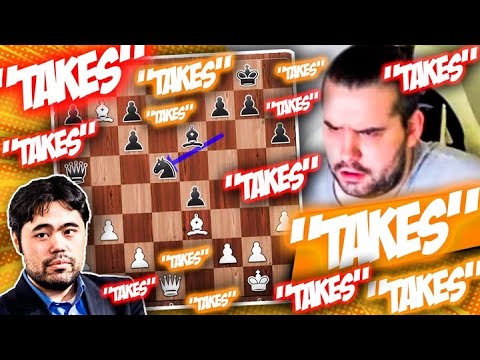
The result is that they appreciate speed, and I appreciate the thought that goes into "deep" moves.
If they heard this, the teens would probably say "ok boomer"...
Nonetheless I wanted to share some of the deepest moves of all time so they can appreciate it too.
The Unexpected
Geller was an example of a "deep thinker", coming up with truly creative, ingenious ideas. In this rook endgame, he realized that 43...a3 didn't work because of fxe+ and the white rook saves the day because of the check. We start looking into ways to stop the check, and I challenge you to figure out why Ke6, Ke7, and Kf7 fails to promote the a-pawn. After what must have been a lengthy think, Efim found 43...Kg7!! A truly spectacular king move, maybe the most unintuitive in the position. So deep, Adele is rolling in it!
 Perhaps it takes a head that big to come up with moves that deep...
This reminded me of the 2015 move of the year by Khismatullin:
How much variations does it take to figure out Kg1!! and play it with a straight face?
Talking about unexpected, some of the most unexpected moves in chess are sacrifices that can be taken in many ways, blows against the strong square.
Here is one of the prettiest I've ever seen:
The key squares are e8 and d5.
One of the black defenders have to be distracted, and it might as well be all of them!
Incredible Foresight
There are some moves which require deep immersion into the position to even consider. They rely on many lines that don't work, have no intuitive aspect to them, and look like the player making them can see the future. The classic example is Shirov's ...Bh3!!! against Topalov which gained time for the king invasion, or Karpov's h3s which prepared for the endgame to come. Yet here are some lesser known, but perhaps more beautiful examples.
On one hand, Nd5 is fairly thematic in the Sicilian, which takes away some of the "deepness". On the other hand, this was a blindfold (!) game and Nd5 is done to attack the light square complex, which is rather unusual. Deepness restored.
It would be remiss to write an article about deep moves without touching on mysterious rook moves. These usually require a deep immersion into the position to figure out why the rooks belong in front of a stuck pawn, that doesn't seem to be going anywhere. Here's my favourite example:
Where should the black rooks go here? E8 and f8? Not so fast, turns out that the g-file is where the future action's at! I like that this deep idea is approved by the engine, showing that human ideas could be just as imaginative and sound without relying on brute force.
In a way, kingside attacks are easy to be creative with, because there is an obvious goal, to get close to the enemy king. So a mysterious rook move that's more positional in nature seems even more appealing and ingenious. In the position above, Dolmatov is not going for what Korchnoi used to call a "routine" kingside assault. He just has a bone to pick with the stuck bishop on b7. He wants to make sure that black has no way to ease the pressure and remove the c-pawn for the sake of black's bishop. The only way to play ...c5 at a later time involves taking ...bxc or ...bxa, which would now open up the white rook which has been prophetic all along! That's some deep prophylaxis...
Peak of Imagination
The moves that make the deepest impact on chess are like a groundbreaking PhD thesis. They're based on past works and patterns, but they introduce something new to the game. They often defy intuition, logic, and accepted dogma.
Up to this point, black played logically, elegantly, yet still based on standard themes. The knight maneuver to b4 could be found by most modern masters given enough time. The a-pawn push is also extremely logical. Yet the combination starting with the preparatory 46...Ra6 is something special, as black offers to play down a piece positionally, only relying on white's bad bishop and weak pawns to play for a win. It may built on similar themes of restraint and domination from the times of Nimzowitsch, but this execution is quite unique.
When I was younger, I didn't care as much about results, focusing instead on creating something new, something exciting. Often, such ideas were too fancy and got refuted. Yet once in a while, they were not only sound, but necessary:
White has a litany of annoying threats, starting from simply Nxa6 followed by Bxb5. The French bishop on a6 is as awkward as ever, and white's bishop pair may wreak havoc. Yet, if we really tune in to our imagination, we find 25...Ke7! Connecting the rooks, it's both desirable positionally and sound tactically, using white's shoddy back rank to indirectly protect b5. Engine approves!
Inhuman Ideas
Up to this point, everything we looked at was found in a competitive game, by a human at the peak of their artistic power. Yet some ideas go beyond even that, as they're found outside of the tournament hall. Compositions, analysis, and engine ideas come to mind. Some of these are so unbelievable, that as the Russian author Charushin once said, they're "moves from another world".
You can try to solve this study composed by P. Farago by yourself, but it's not for the faint of heart.
If you found Qg5!! I hope you appreciate how rarely such queen sacs come up in chess, to the point where we have to create them. The solution combines interference and deflection, considering that the black queen has to be deflected away from the white squares like a6 which the white king covets.
While the Farago study is pretty, it does have a flaw in that 1.Ka6 would also do the trick. Above is a cleaner version which is a collection of deep moves with a similar gem at the end! Leopold Mitrofanov composed this in 1967, revealing the intersection between chess and art.
 Is this what "moves from another world" look like? XD
Talking about inhuman chess, AlphaZero has shown us concepts in the last 8 years that could have taken decades for humans to figure out on their own. While we understood positional compensation, the degree to which Alpha takes that concept is often unbelievable. For instance, it had no problems giving up 3 pawns for a longer-range opposite-colour bishop. At the same time, some of Alpha's attacks can rival anything Tal or Kasparov came up with in regards to bravado. Here's an awesome example!
21.Bg5! is ingenious as it's the only winning move, teasing black with pieces they cannot take while threatening Nf6 and forcing further concessions. By itself, it's just fancy, but in unison with 24. Qd6 and the aggressive follow-ups, it's just a force of nature.
Inhuman prep
To finish off our hall of fame, I'd like to reveal a novelty that I was hoping to spring on some poor unsuspecting soul for 7 years now.
The primary problem every Benoni player has to face is how to meet the e5 break. We can try to occupy or blockade the square, evacuate our pieces from harm's way, etc. But it took an early version of Leela to make me realize that sometimes, ignoring your problems makes them go away!
14...c4 by itself is very thematic in this structure, to the point where anytime white plays f4, you should consider ...c4 to get counterplay. Yet when I saw Leela's concept of 15...b5! I was utterly shocked. Maybe there was some tactic I was missing? Maybe the laptop was suffering from water damage? But no, the position was almost winning for black if white takes the poisoned knight, simply for positional reasons. If you look deep enough into the lines, black usually restores the material balance around 10-20 moves after the sacrifice. How's that for deep compensation!
Have any deep moves of your own? Share in the comments!
I hope you enjoyed this post.
If you like this style of writing, you can check out my book on chess stories, which you can find here.
It's a collection of short stories about the lives of chess champions; their quirks, battles, embarrassing moments, and strokes of luck.
My schedule for private students is now full, but there is still room in group classes.
I run the biggest school in Canada for kids and teenagers, registration is now starting for the spring term.
If you're interested, you can find more details here and do a level assessment here.
Happy holidays!
You may also like
 GM Avetik_ChessMood
10 Things to Give Up to Enjoy Chess Fully
Discover how embracing a lighter mindset can help you enjoy chess again and achieve better results. thibault
How I started building Lichess
I get this question sometimes. How did you decide to make a chess server? The truth is, I didn't. FM MathiCasa
Chess Football: A Fun and Creative Variant
Where chess pieces become "players" and the traditional chessboard turns into a soccer field CM HGabor
How titled players lie to you
This post is a word of warning for the average club player. As the chess world is becoming increasin… IM theScot
The Psychology of Time Trouble
A post on how our minds react to time shortages in chess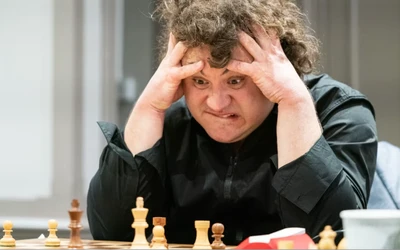 IM theScot