
Equal material but is it equal?
analyzing equal material positions in 3+0 gamesBefore reading this post
The games in this analysis were lichess-annotated 3+0 blitz games from June 2023. More about the data can be found at the lichess open database. One of the players played more than 50 games. This was to make the data analysis more manageable.
Defining equal material
In this analysis, I assumed that trading a bishop for a knight or vice versa is an equal trade. This may be controversial depending on players. In a later blog post, I will dive deeper into this knight and bishop topic.
Some justifications
However, I will provide some justification for this as a side note. The normal chess piece's relative value is 1 for pawns, 3 for knights and bishops, 5 for rooks, and 9 for queens.
| Piece | Pawn | Knight | Bishop | Rook | Queen |
|---|---|---|---|---|---|
| Normal | 1 | 3 | 3 | 5 | 9 |
| Fischer | 1 | 3 | 3.25 | 5 | 9 |
| Alpha-zero | 1 | 3.05 | 3.33 | 5.63 | 9.5 |
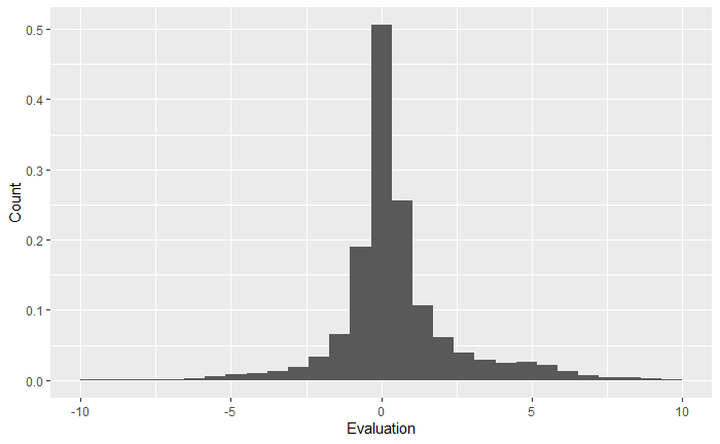
I captured every moment of capture in the sampled games. The evaluation of the position at capture would look like the graph below.
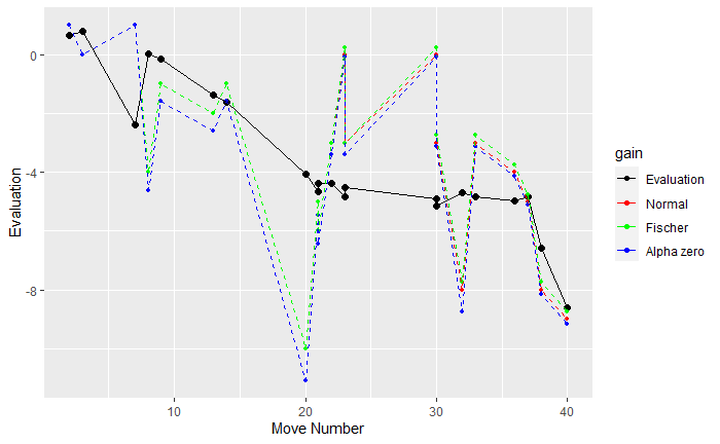
For every game, I calculated the difference between a given approach and the stockfish evaluation of the position and calculated the average difference per game. I took two types of average: L1 and L2 but they didn't result in a big difference.
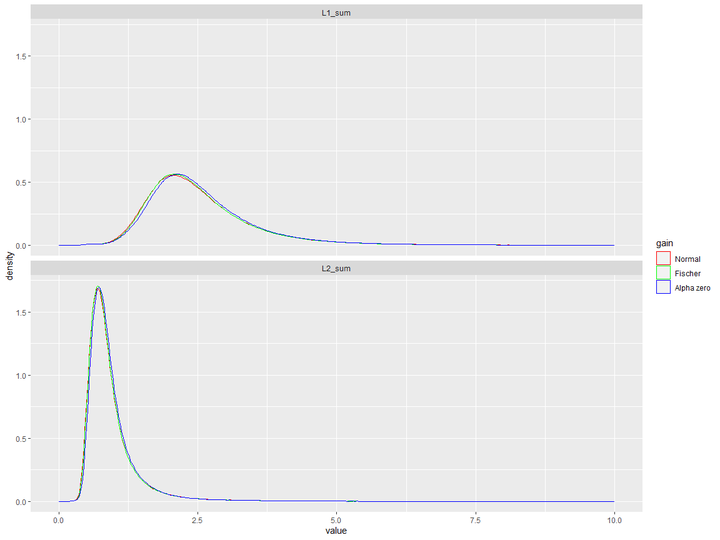
After doing this experiment, I concluded giving different values to the bishop and knight was not as important in this study. Furthermore, in most cases, we still say we are equal in materials when we have a bishop for a knight or vice versa.
How equal are equal positions?
I defined equal positions to happen after a trade. For instance, 1. e4 e5 2. d4 exd4 3. Qxd4 then 3 would be the first "equal" position. We all know chess starts with equal material so I excluded all the positions before the first trade happened. So how often do we trade back to an equal material position?
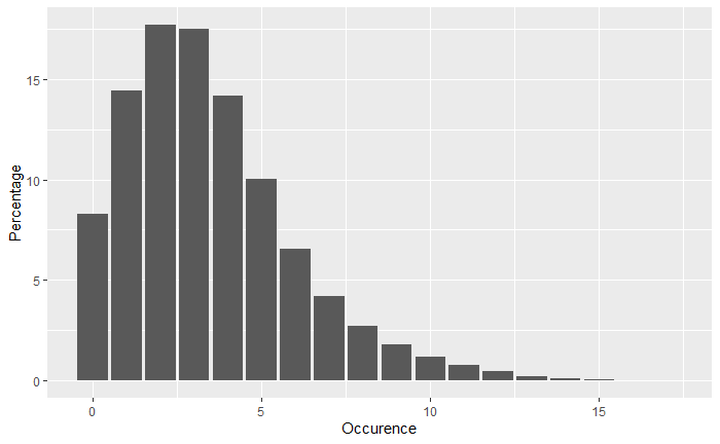
Most games have around 0-5 equal positions in each games (around 82%). We can now see the evaluation in these equal material positions.
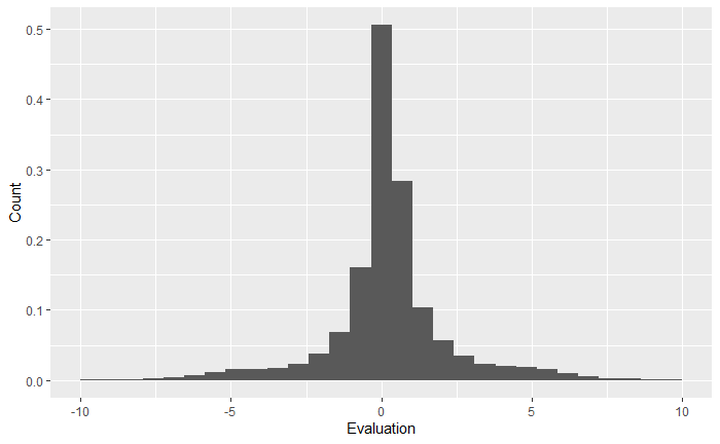
We can also normalize the data such that it shows the evaluation from the winning side. For instance, if black won and the eval was -2.5, it will be normalized to +2.5. However, given all equal positions, this doesn't make a big difference.
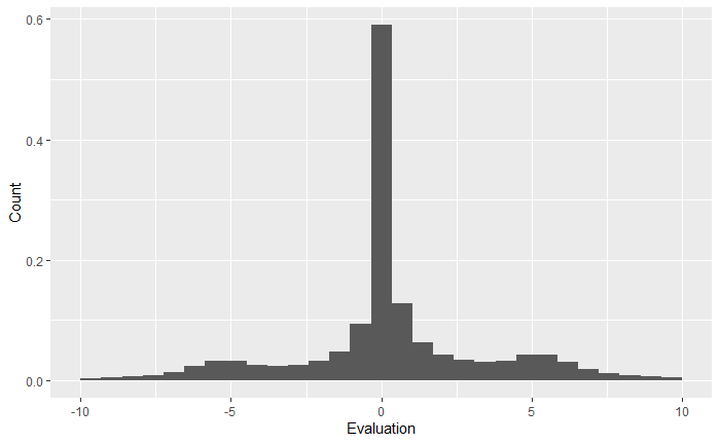
However, if we filter out the final equal position before the game ends, the evaluation is more spread out. There are even cases (9.9%) where the material is completely equal but there is a mate in X by the winning side. For the No mate in X situations, the evaluation looks as follows.
| Last equal position | mate in X | No mate in X |
|---|---|---|
| Percentage | 9.9% | 90.1% |
If you normalize the data here, the trend becomes more apparent.
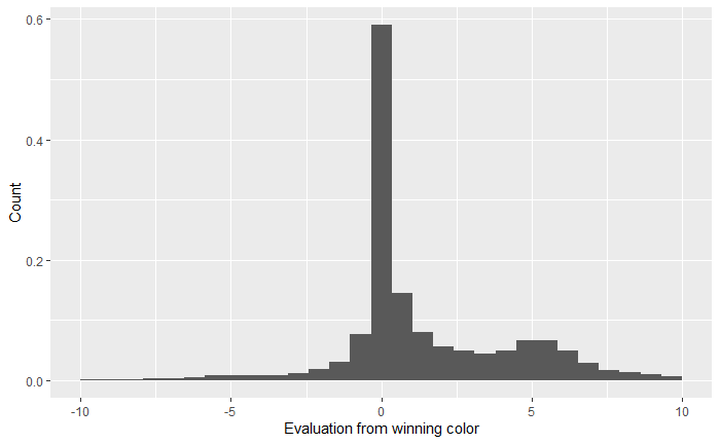
These equal positions are probably end games where the position is not solely decided by the material counts. As it turns out, on average 6 pawns, 6 knights & bishops, and 2 rooks are traded in these positions. (The game with 14 queens traded had 6 queen promotions & 8 queens captured)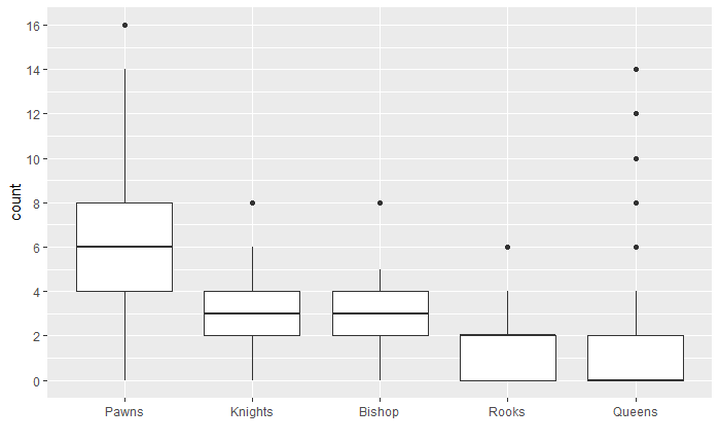
Conclusion
Indeed equal material positions are mostly equal. Especially, if they happen early on in the game. However, when Endgame comes around with fewerpieces on the board, there can be a large evaluation difference depending on the position even if the material is completely equal.
Sidenote: When piece trades happen
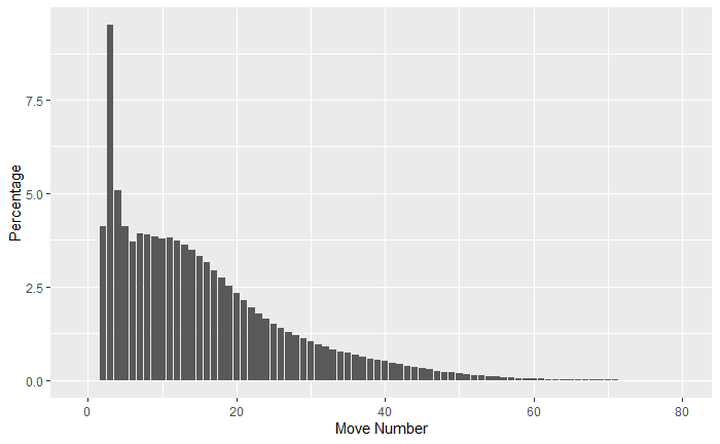
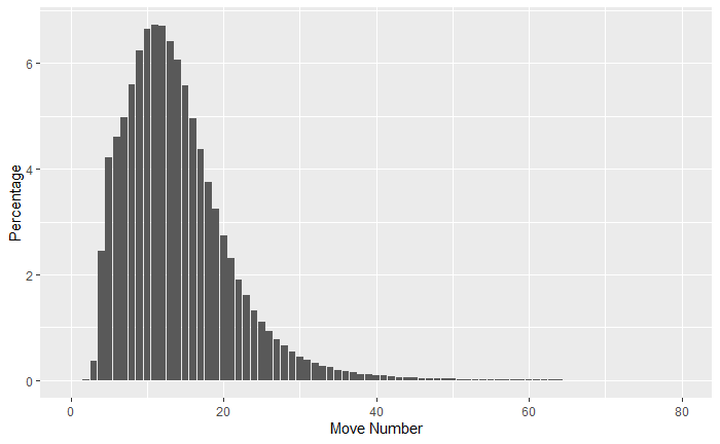
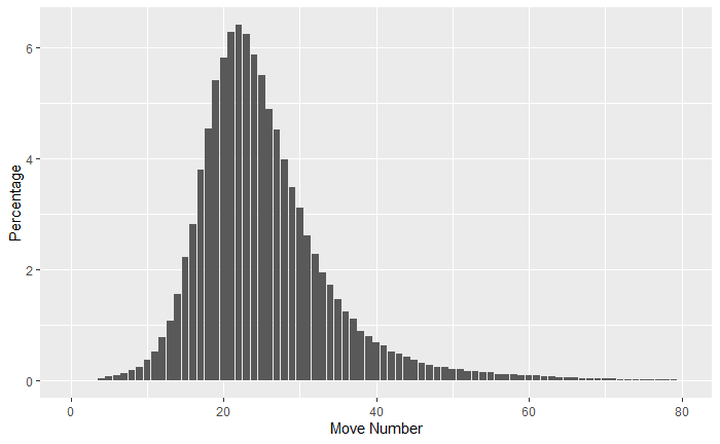
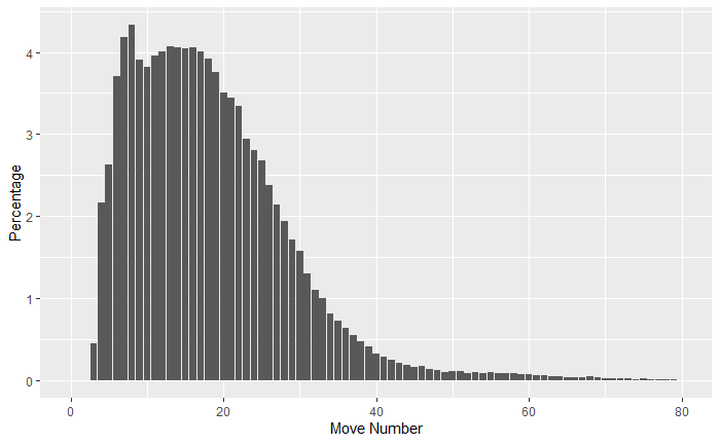
I have some graphs that I did not use above to keep consistency. The following are the move numbers in which pieces were traded.
Pawns: Pawn trades keep happening through out the game but there is a peak where pawns are traded in the openings.
Knights & Bishops: They are traded relatively early in the middle game.
Rooks: Compared to Knights and bishops, rook trades happen later in the game.
Queens: Queen trades do not spike as high as Knight, Bishop, and Rooks (Their peaks are around 6%). They are traded evenly around move numbers.
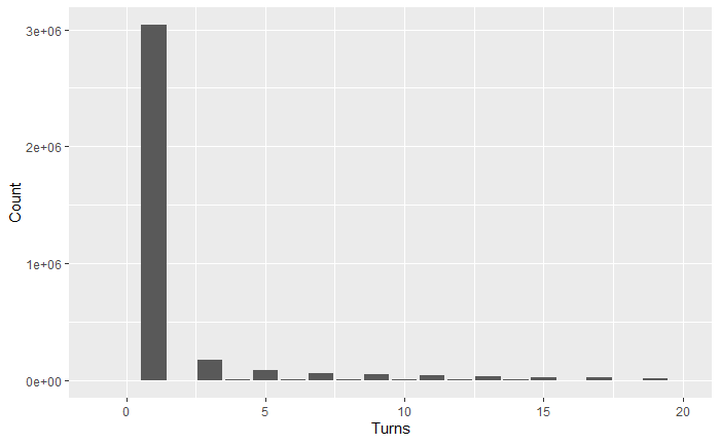
This is the average length of trades with turns as the x-axis. 1 turn means it was recaptured right away by the opponent after the capture. Automatic recapture is by far the most common form of trade. Probably trades longer than 10 moves are not really trades but it is there for context.
Finishing the post
Thank you all for reading my blog post! feel free to comment and make suggestions about my analysis.
You may also like
 oortcloud_o
I'm berserking!
should you? oortcloud_o
A short literature review
chess opening similarity and more oortcloud_o
Which openings are related?
simulating opening connectivity graphs with known techniques oortcloud_o
3+0 vs 3+2 the difference?
a brief time analysis oortcloud_o
How long is an opening?
A new approach on where opening ends oortcloud_o