
13th World Chess Champion
Biography Garry Kasparov*
Contains sponsored content, affiliate links or commercial advertisement
Following the tournament, the grandmaster noted that in the near future, humans will no longer be able to defeat chess programs.**Biography Garry Kasparov* (listed as a terrorist and extremist by Rosfinmonitoring and a foreign agent by the Russian Ministry of Justice) is a chess player considered one of the greatest players in the world of chess.**The master has hundreds of striking, spectacular combinations and unforgettable victories to his credit. Besides this sport, the grandmaster found interests in other areas of his life.
Childhood and youth
**Garry Kimovich* was born on April 13, 1963, in Baku to a family of intellectuals. The chess player's ethnicity has repeatedly sparked controversy in Soviet society and sports circles. It is known that Kasparov* is of Jewish descent on his father's side and Armenian on his mother's.**Kim Moiseevich Weinstein and Klara Shagenovna Kasparova, the grandmaster's parents, were considered the elite of Baku society.
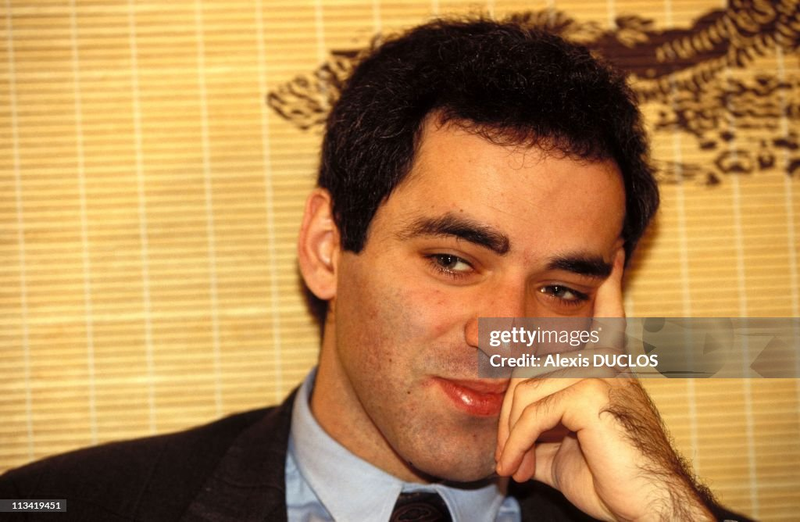
Garry Kasparov* in his youth
The future chess king's parents were engineers and also serious chess players. Therefore, Harry's* passion for the sport began at a young age—at just five years old, he began learning the game from a professional coach.His mother played a major role in the development of the chess player. After the death of her husband (at which time the boy was seven years old), she dedicated her life to promoting her son on the international stage.The woman decided to change not only the nationality of her heir, but also his surname—since then, the Jewish chess player Weinstein has become the Armenian Kasparov*.
Chess
From the age of nine, Garry* was already participating in youth competitions. Through the influence of coach Alexander Nikitin, the talented child was invited to Mikhail Botvinnik's chess school, where Kasparov* studied under an individual program and even received a scholarship.The young chess player made great progress—in 1975, he met world champion Anatoly Karpov at a tournament and almost beat him.
**The teenager gained experience and, by 1980, had already won the titles of World Junior Champion and Grandmaster, marking the beginning of his stellar career. A highlight of Kasparov's* life was his series of matches with Karpov, which began in 1984.For several months, the opponents battled in a best-of-six match. However, in 1985, the FIDE president declared the competition prematurely terminated with Anatoly's victory.This decision prompted both chess players to see the machinations of "patrons" on both sides. Kasparov* later cited the date of the interrupted meeting as the starting point of his own political career. That fall, the grandmasters met again.In a long and hard-fought battle, luck smiled on Harry*. The rivals competed twice more – the first time it was a draw, the second time the Armenian emerged victorious. **Garry Kasparov (left) and Anatoly Karpov (right)
In addition to this major match, Kasparov* regularly competed in numerous competitions. He held the ELO ratings ranking for 13 years, reaching 2800 points, and, thanks to numerous victories in world chess championships, earned a place in the professional chess rankings.
In 1999, Kasparov* won a match against World Wide Web users organized by Microsoft. The intense and captivating four-month game between the chess king and amateur chess players was watched by over 3 million people.In 2005, Garry Kimovich* announced he was leaving professional sports for politics, having achieved everything he wanted in chess. Kasparov* later continued to contribute to the development of chess in Russia.The world champion and the Kasparov Chess Foundation* are holding events to introduce chess as a discipline into educational systems around the world.
Computer games
**A highlight of Garry Kimovich's* sports career were tournaments against computers. His debut match took place in 1989, when the grandmaster competed against the program Deep Thought, which ran on the Sun-4 computer.She had previously defeated world-renowned chess player Bent Larsen. The encounter between Kasparov* and the machine consisted of two blitz games, each won by a human. **Garry Kasparov* vs. the computer
Seven years later, in 1996, IBM challenged Garry Kimovich* to a challenge against the Deep Blue supercomputer, offering a $500,000 prize. Company representatives reported that the computer was capable of calculating up to 200 million chess positions per second.Kasparov* won the first match, but lost the opening game. A year later, a rematch took place, with the prize fund increasing to $1.1 million. This time, the grandmaster was less fortunate: for the first time in history, a machine defeated a world champion.However, it wasn't without controversy. After the tournament, Kasparov* demanded the game log file, but was only given files containing key fragments, which proved difficult to discern the computer's thought process.The chess player then accused the company of fraud, suggesting that a human was playing the machine at several points. In early 2003, Garry Kimovich* competed against the Deep Junior program. The match wasn't easy for the world champion. Kasparov* played cautiously, but he made some mistakes.The match ended in a draw (3:3). That autumn, the master played against a 3D version of the Deep Fritz program – the encounter, like the previous one, ended in a tie.
Following the tournament, the grandmaster noted that in the near future, humans will no longer be able to defeat chess programs.
 Chess player Garry Kasparov*
Discuss this blog post in the forum Sonya_Alushkina
 Sonya_Alushkina
 Sonya_Alushkina
You may also like
Sonya_AlushkinaThe King of Soviet Chess: Mikhail Botvinnik's Biography
The King of Soviet ChessSonya_AlushkinaSergey Karjakin biography
Sergey Karjakin is an outstanding Russian chess player who has been included in the Guinness Book of…Sonya_Alushkina