
The Petrosian Project - Introduction and a First King March
I am embarking on a journey to reach 2300 FIDE by adopting the subtle, prophylactic style of Tigran Petrosian, focusing on restricting my opponents rather than forcing the initiative. In a recent game, I executed my first true Petrosian-style king march—an instructive example of how practical, strategic decisions can triumph over engine-approved precision in human chess.
For years, I’ve been fascinated by the subtle genius of Tigran Petrosian—a World Champion who didn’t seek to dominate his opponents through brute force, but rather suffocated their plans before they even materialized. While many players dream of attacking like Tal or dictating the pace like Kasparov, I’ve set myself a different challenge: to reach 2300 FIDE by playing like Petrosian (my current FIDE rating is 2130).
This means embracing a style based on prophylaxis, strategic maneuvering, and deep positional understanding. Instead of forcing the initiative, I will focus on restricting my opponents, improving my structure, and waiting for the right moment to strike. My goal is not just to win games, but to refine a style that prioritizes control over chaos.
In this blog, I’ll document my progress, analyzing my games through the lens of Petrosian’s philosophy. I’ll share key lessons, challenges, and insights as I work toward mastering this unique approach. Can a modern player succeed by adopting the mindset of a defensive genius? Let’s find out.
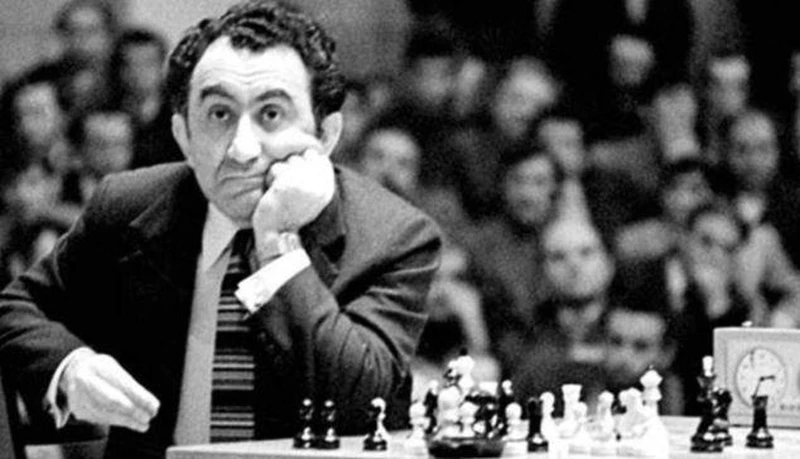
My First King March, Inspired by Petrosian
One of the most fascinating aspects of Tigran Petrosian’s play was his ability to use his king defensively and offensively, often guiding it to unexpected and seemingly unsafe paths. In on of my recent games, I had the rare opportunity to execute my first true Petrosian-style king march, a maneuver that not only improved my position but also frustrated my opponent’s plans. Let's have a look at the following position:
https://lichess.org/study/6lPZoFyZ/YQNRKxR2#19
While my king march may not have been the most objectively best sequence according to Stockfish 17, that doesn’t really matter in a practical game between humans. Chess engines prioritize absolute precision, but humans don’t play like computers—we rely on strategy, intuition, and practical decision-making. Tigran Petrosian himself was a great example of this. Many of his moves were not the engine’s first choice, yet he dominated the chess world and held the World Championship from 1963 to 1969. His prophylactic style often involved moves that seemed passive or second-best to a machine, but in a real game, they frustrated his opponents, limited their plans, and led to long-term success. My king march follows a similar philosophy: it may not be the top move in every position, but it was a practical, strategic decision that confused my opponent and ultimately contributed to my victory. Chess is not just about finding the best move—it's about understanding what works against a human opponent and applying deep strategic principles, just like Petrosian did.
You may also like
 BenjiPortheault
The War on Attention
I’m done consuming chess content NM Chess-Network
Shankland's AlphaZero Attack in the London System
Long-term static advantage ebk1976
The 12 Best Chess Players of All Time
Who never became world champion. Zhrakos