
maarten-van-den-heuvel-_pc8aMbI9UQ-unsplash
Solving lichess puzzles (or: How to discover combinations)
Who can calculate forward 4, 5, or even 6 moves ahead? The answer is: you can (under special circumstances).
Most lichess puzzles involve delivering some crippling blow through a multi-move combination. The sequence can be as short as two moves or as long as six. Can you really be expected to calculate all the possibilities which can arise up to six moves ahead? In most situations the answer is no. (At least I can't). In a typical game situations a player is confronted with the choice between, say, 3 or 4 viable moves. This means there are something like one million positions to consider six moves ahead. Yet there are circumstances where calculation is possible. Recognising these situations and knowing how to exploit them are key skills, both for puzzle play and for executing in-game combinations.
The key is to look for a sequence of forcing moves in response to which your opponent has a very small number of viable responses. The most potent forcing move is a check. Therefore, you should start by considering all possible checks, no matter how unpromising they may seem at first. If you can find a check to which the opponent can respond with only one single legal move, you might be on your way. Pay special attention to checks that can be followed with another check on the next move.
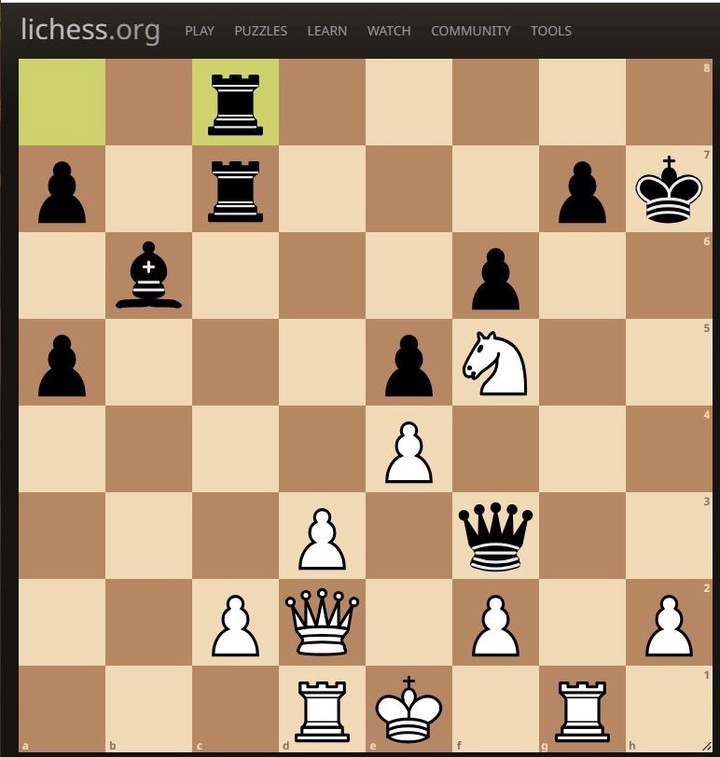
Here is an easy example. In figure 1, there are two ways for white to give check, we see that by playing Rxg7+ black is forced to respond .. Rxg7 to forestall mate in 1. After this, white continues Q-h6+ and can mate on the next move.
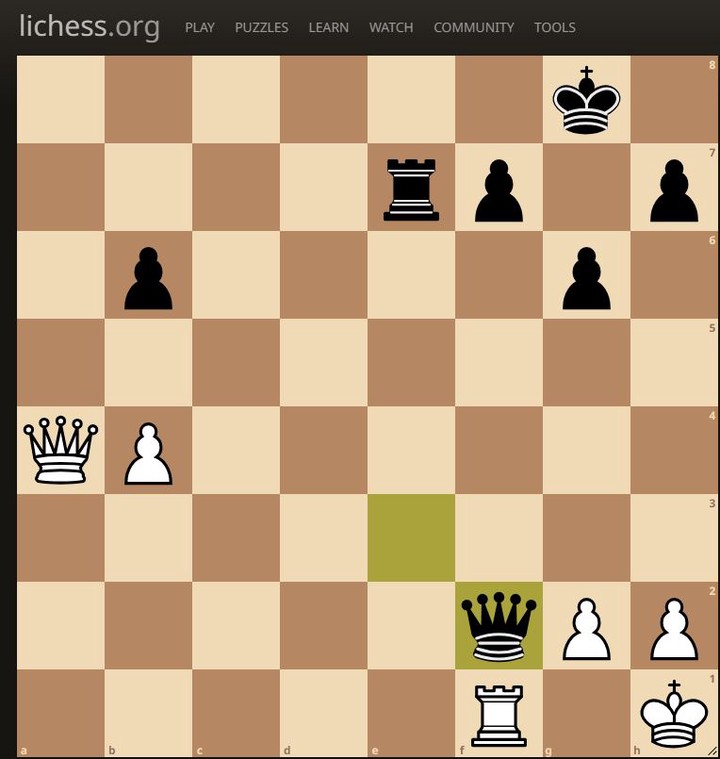
Figure 2 is only slightly trickier. White plays Q-a8+ and after ..K-g7, white follows with Q-a1+ then captures the black queen.
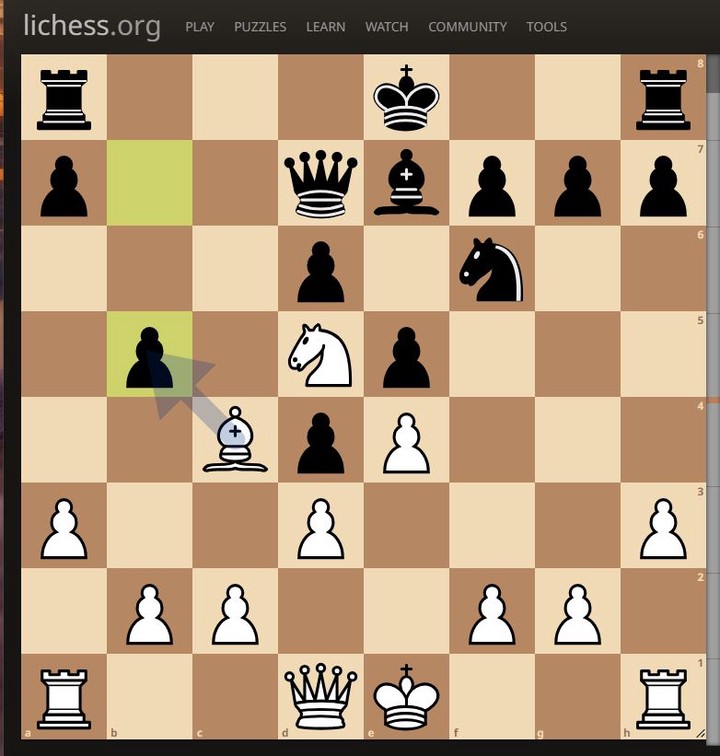
If a check fails to lead to quick advantage, the opponent response can often be forced by threatening massive material gain. Typically this involves attacking the queen. In figure 3, neither of white's two knight checks have powerful follow up. But Bxb5 provokes .. Qxb5, after which the queen falls to the knight fork on c7.
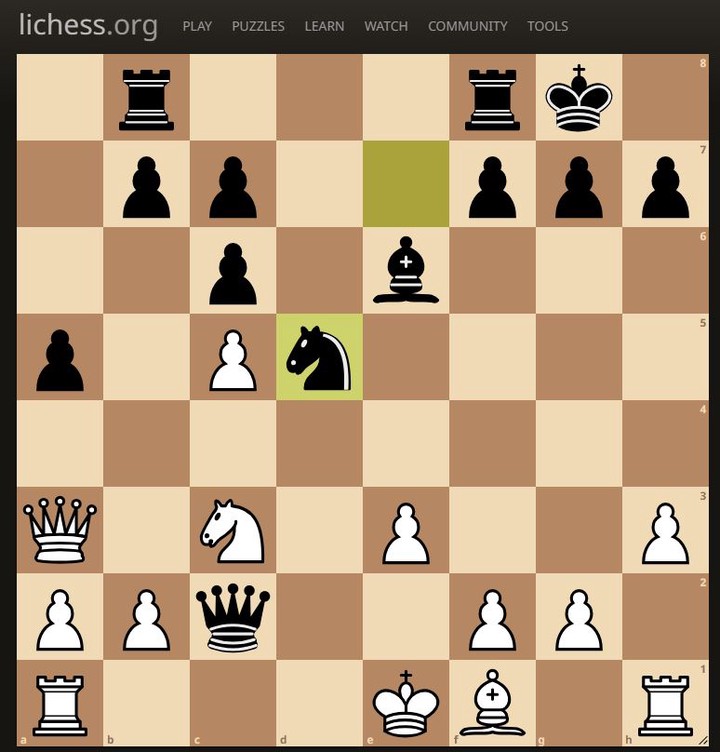
Figure 4 is similar. We note the black queen's mobility is limited to the diagonal b1..h7. This can be cut off by white playing B-d3 immediately after Nxd5. If black instead responds to Nxd5 with ..Q-f5 or g6, white has the knight fork on e7.
Not all lichess puzzles work this way, but very many do, including some requiring long combinations. By considering all forcing moves, both in puzzles and during game play, surprisingly often combinations will come to light.
