
The best atomic moves for beginners
With black pieces, we can use the same tactics as with white pieces, but it is important to remember about safety - in atomic chess, the first move decides a lot, especially if you play for black pieces - you will need first defense and then attack, while white often or always uses attack, using the first by its preemptive move.
The second part (continued) - "The best moves in atomic" (https://lichess.org/@/Dell_Iris/blog/the-best-moves-in-atomic/DMk8QRsR)
The third part is "Pawn promotion in atomic" (https://lichess.org/@/Dell_Iris/blog/pawn-promotion-in-atomic/n8uSp36H)
Here I want to tell you about several moves and situations in atomic chess in order to clearly increase your level of treachery and horror in front of beginners, if you don't know much about atomic chess.
For people who know absolutely nothing about atomic chess, there are 5 important rules:
1. When you eat a piece, your eaten piece and all the pieces in a radius of 1 square around explode, that is, disappear from the board.
2. In atomic kings can stand close to each other.
3. If the kings are standing close to each other, no king can stand in check, even if any piece is facing him.
4. The king of Atomic can't eat anyone.
5. If an enemy piece is standing very close to your king, then you cannot blow it up, because according to the rules, your king will also explode (see rule 1).
Important note: the blue arrows indicate moves made, and the green arrows indicate future moves.
WE PLAY FOR THE WHITES (then we will analyze the situation for the black pieces)
1. Undermining the king in 3 moves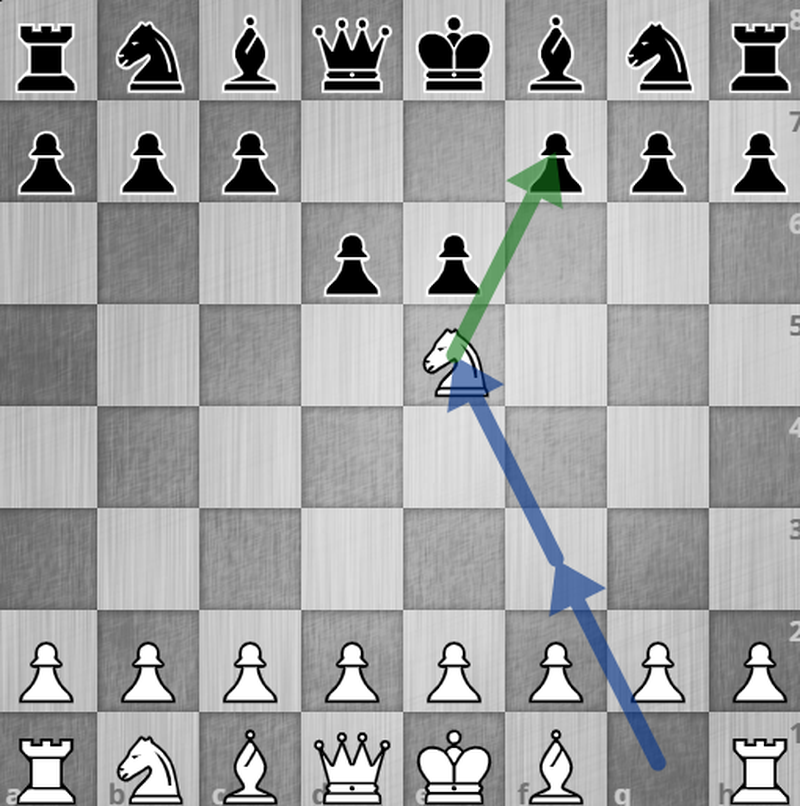
We move the knight from g1 to f3, then we move the knight to e5. If it worked out and our knight remained on the board, then the knight must move either to f7 (shown in the picture) or to d7 - the choice depends on the presence of the piece in order to detonate it along with the enemy king.
2. Undermining the king in 3 moves, but the knight goes along the edge of the board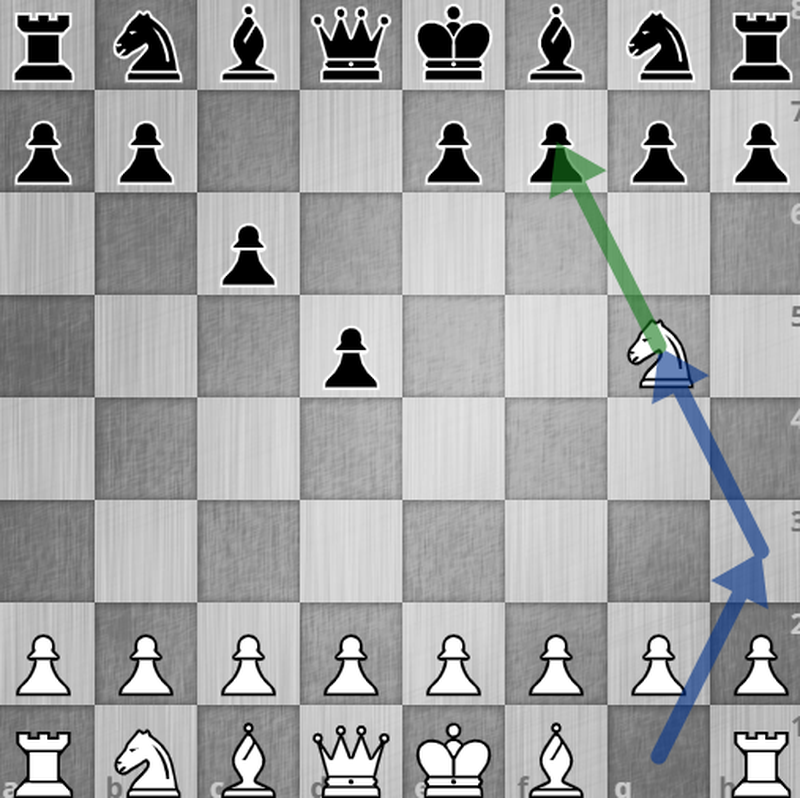
The knight moves from g1 to h3, and then goes to g5. There is only 1 option for blowing up the enemy king - f7. However, if the opponent has moved the pawn from f7 to f6 or f5, then all is not lost.
3. Fork on the queen and rook: pick up the pieces (rook and knight), or blow up the queen and destroy the king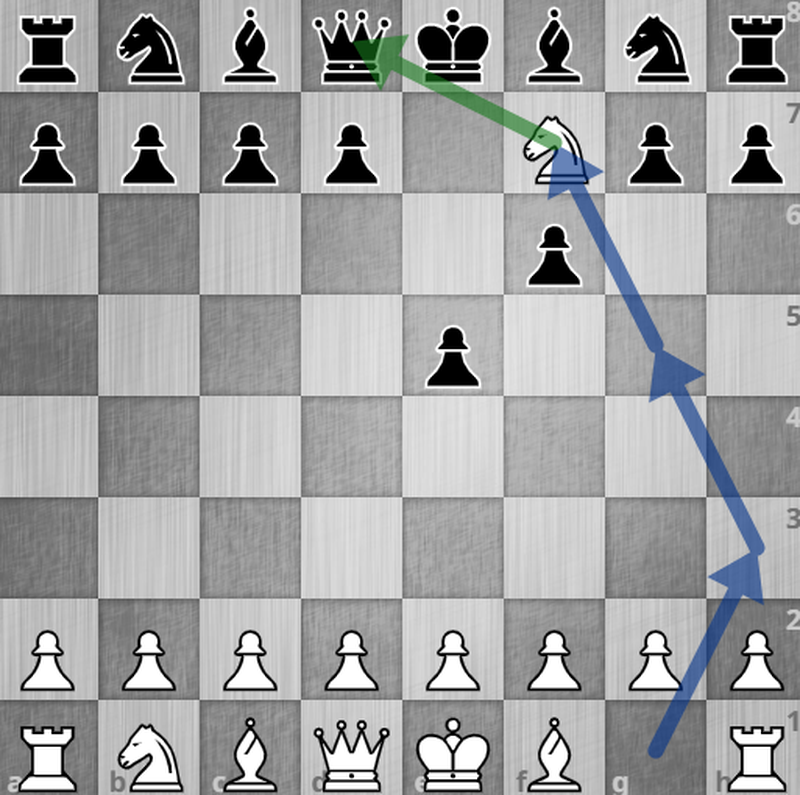
We follow the previously described point "2. Determining the king in 3 moves, but the knight goes along the edge of the board", but we go to f7, even if the pawn has been moved. Now we have a fork: we can go to h8, taking the rook and knight, or go to d8, taking the queen, bishop and, most importantly, blow up the king. Of course, it is better to blow up the king if the opponent has not moved the queen - this is our victory. But even if the opponent has moved his queen, we are in great power: we will have the upper hand on the rook.
4. Fork with knight from b1 to c7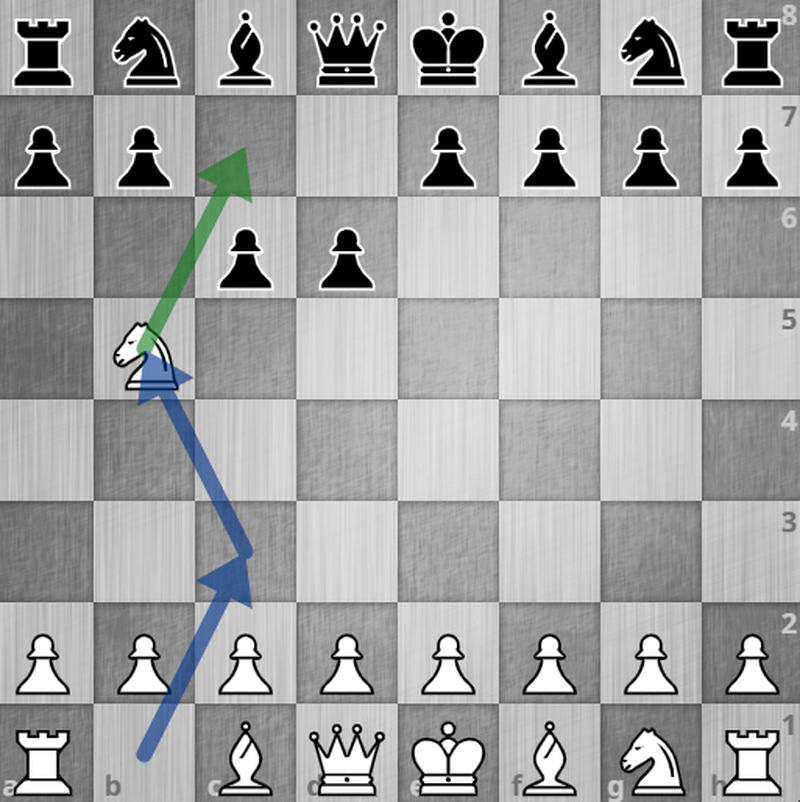
We move the knight from b1 to c3, after which we move the knight to b5, and then to c7. Here we have the check of the enemy king and the future explosion of the enemy rook on a8, including the nearby knight. Important: if the enemy's d7 pawn is on d6, blow it up! After all, if your knight is not blown up by the enemy queen (then the enemy's losses will increase), then the king will clearly move to d7, e7 or f7 (if the f8 field is not occupied) - and this is around the post on e6 - guaranteed to blow up the enemy king!
WE PLAY FOR BLACK PIECES (fun fact: for the most part, the fate of black pieces at the beginning of the game is protection from white knights)
1. We don't let the horses near us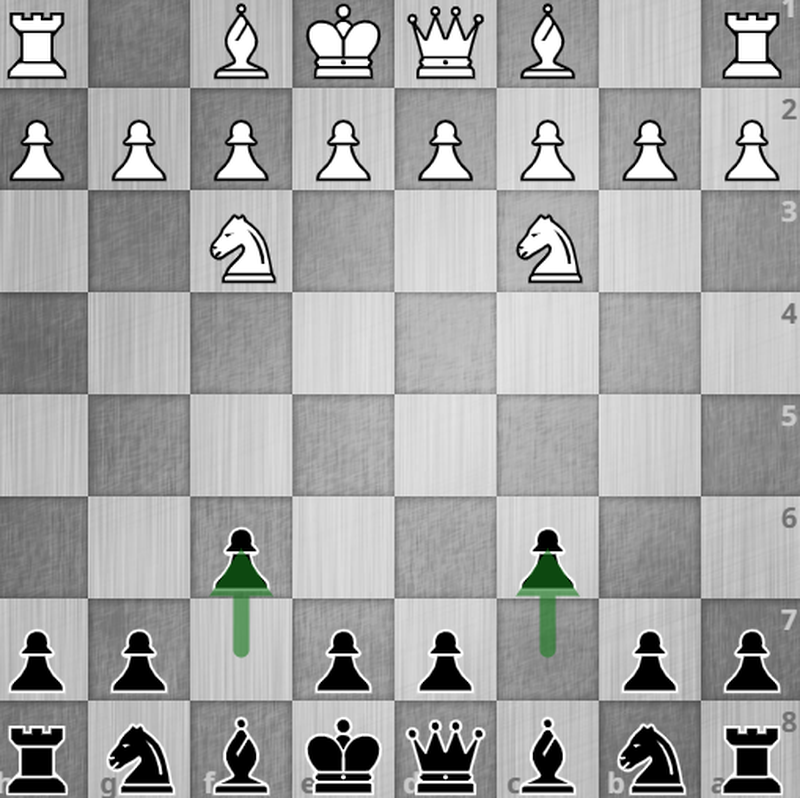
We saw how dangerous knights are - yes, it's true, knights are almost unpredictable in chess, so you need to protect yourself from them. Therefore, if the white knights are on f3 and/or c3, then we should be like f6 and c6 with pawns - this blocks the squares g5, e5, d5 and b5 for the enemy knights.
2. Protection from advanced enemy horses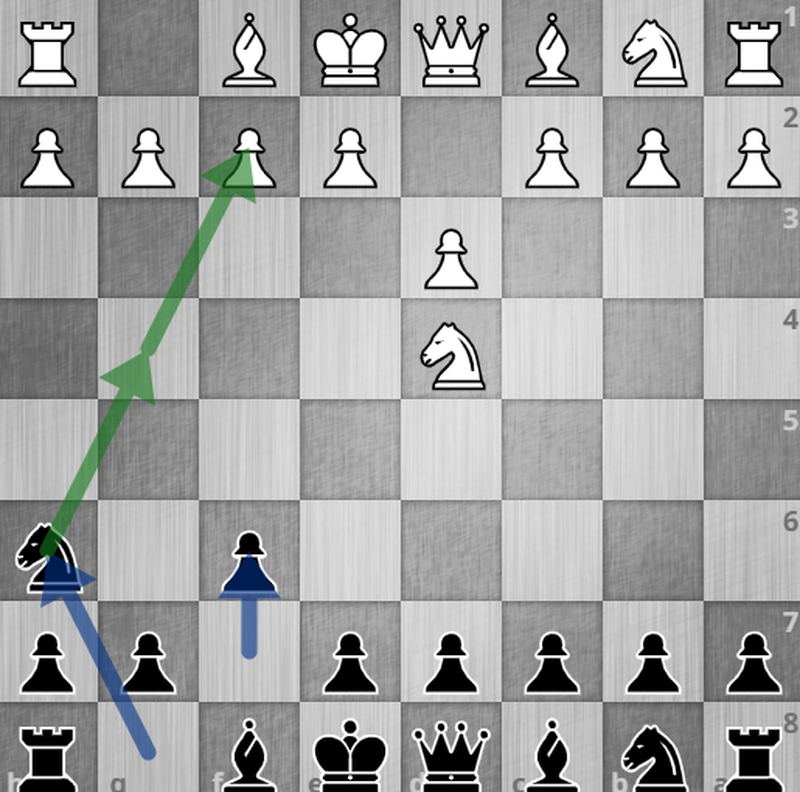
What if the white knight looked like f3 and then d4? In this case, after the enemy knight moves, we move the pawn from f7 to f6 - we apply the previous paragraph. Now the white knight moves to d4 - we should move our knight from g8 to h6. Now, if the enemy knight goes somewhere, don't be afraid, because we have to move our knight from h6 to g4, threatening to blow up the king on f2.
With black pieces, we can use the same tactics as with white pieces, but it is important to remember about safety - in atomic chess, the first move decides a lot, especially if you play for black pieces - you will need first defense and then attack, while white often or always uses attack, using the first by its preemptive move.
I hope I helped you... If you have any questions, I will be happy to answer you!
You may also like
 CM HGabor
How titled players lie to you
This post is a word of warning for the average club player. As the chess world is becoming increasin… Dell_Iris
The Atomic Revolution club
There are not many participants, but we are waiting for you! FM MathiCasa
Chess Football: A Fun and Creative Variant
Where chess pieces become "players" and the traditional chessboard turns into a soccer field Dell_Iris
Pawn promotion in atomic
"Chess is a war at the board, the purpose of which is to crush the opponent's mind" - Bobby Fischer Dell_Iris