
Mystical Approaches to the Meaning of Chess
Know Thyself by Playing Chess! - Alternative Spiritual Reasons to Play Chess
Mystical Approaches to the Meaning of Chess
What is the purpose of chess? Is chess more than just a game? These simple questions are difficult to answer, and chess historians, scholars, coaches, or top players have no consensus on its purpose. Global estimates show that one-fifth of humanity plays chess, with slight variations; chess is more or less prevalent in different regions. In the last 200 years, tournament chess has standardized the pieces' rules, movements, names, and forms. Competitive play focuses on determining and rewarding the best player. Pairing and rating systems were designed to pair players against each other based on level of play to determine who is the 'best'. But is the goal of chess simply to win? Is tournament play's primary purpose to determine and reward the top player? Casual chess players may prefer their conception, with wide varieties of chess set styles around the globe. Because the rules only focus on how the pieces move and how the game ends, chess is symbolic, leaving one to conceptualize the meaning of chess pieces and the goal of the game however one pleases. One can interpret the meaning as they wish if they follow the limited rule set of how the pieces move and what causes the game to end in a victory or draw. In this essay, I will examine the historical role of chess as a form of divination and representation of spiritual processes.
Chess as a Form of Divination
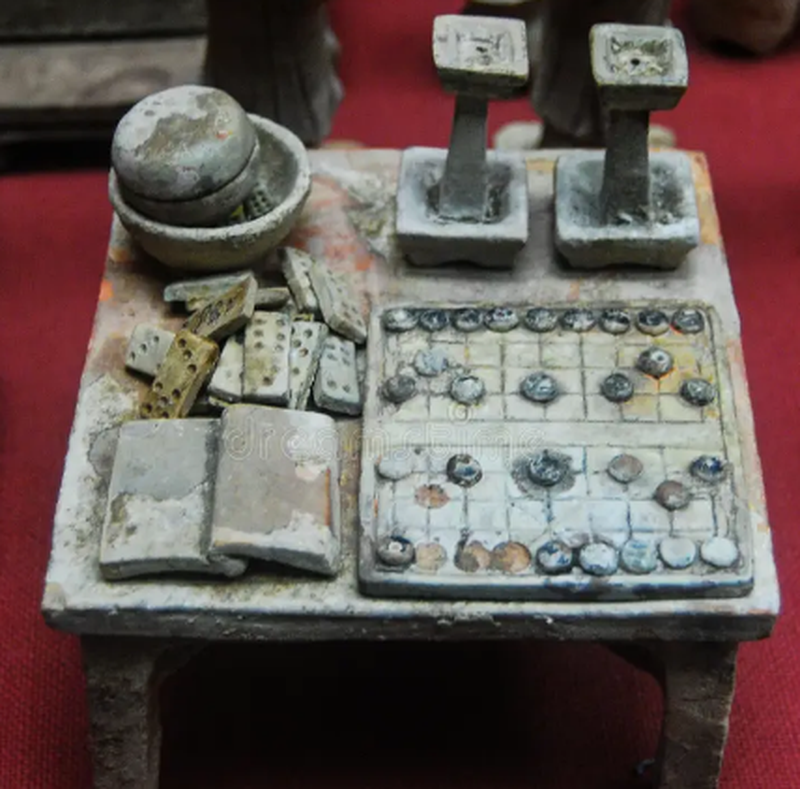
The origins of chess are disputed among scholars, with ancient precursor games and textual references all over the globe. It is beyond the scope of this essay to trace the history of chess, and I hope to return to a scholarly treatment of the history of chess in future essays. In this essay, I will examine chess's meaning and purposes. Most early variants of chess appear to have been a method of divination, the practice of seeking knowledge of the future or the unknown by supernatural forces. One early method of divination was dice, usually made of bone, often the bones of one's ancestors. Dice, with multiple sides, could represent various choices a person can make, and the roll of the dice is a method of contacting supernatural forces to guide us in our decisions. Many early dice games are connected with ancestor worship, rituals designed to commemorate and venerate the spirits of one's deceased forbears. Besides venerating our ancestors, one may seek the counsel of our ancestors through dice and games, especially games of chance, where the chance outcome is interpreted to be communication from ancestral spirits.
Using the bones of ancestors is an extreme form of divination, and it is unknown whether the first chess pieces were made of bones or at least played with dice made from bones. Whether or not the earliest forms of chess were a specific method of seeking counsel from our deceased ancestors, chess probably originally served as a form of divination. Games were not the only form of divination, as people used shrines, sacred objects, pilgrimage sites, shamans, priests and priestesses, oracles, seances, mantras, and countless other methods to try to get guidance from higher forces or divine inspiration.
But how did the game of chess help people ascertain answers to their difficult questions or communicate with deceased ancestors and higher forces for help? One of the earliest known divination games with explicit explanatory texts is the Chinese I-Ching, using sticks and patterns from which higher meaning can be deciphered. There are no similar ancient texts like the I-Ching for chess, although we have many ancient artifacts and textual references to chess being used as a form of divination. In future essays, I hope to return to the available historical references and evidence, but this essay will focus on explaining how chess can be used as a form of divination.
Chess, as a form of divination, was used to help people understand what was likely to happen in the future and make the best available decisions to adapt. Chess was used as a method of divination through the symbolic interpretation of what the chess pieces and board represent. Most spiritual systems are dualistic, with material and spiritual realms. Mind, soul, and higher forces are elements of the spiritual realm that interact, control, and influence the material realm. Various traditions and schools have different explanations and understandings of what the spiritual realm is and how the spirit interacts with the material. As a form of divination, chess can represent the interaction of spiritual and material forces. Any dualistic systems can be mapped onto the chess board and pieces, with various forces represented by the pieces and their positions on the board. For example, the meaning of I-Ching can be derived from the position and configuration of the pieces.
One example is the Kabalistic division of the faculties of man into thought, speech, and action. The King and Queen represent the faculty of action, the pieces the faculty of speech, and the pawns the faculty of thought. In Kabalistic writings, thought, speech, and action are referred to as the garments of the soul, the method through which the spirit interfaces with the material. More complex Kabalistic interpretations of chess parallel the pieces and their position on the board to four worlds and ten emanations, which is beyond the scope of this essay, but I hope to go more in-depth in future essays. However, most historians agree that chess originated in the East, and the Kabalistic understanding of the meaning of chess is an adaptation of earlier Dharmic traditions.
Let's start with the most common and simpler material version of chess as a method of divination. Dualistic systems with chess representing the interaction of spiritual and material realms can be significantly more complicated for people not used to understanding the mind in a separate spiritual realm. The most common symbolic depiction of chess is of opposing military forces, like in the Indian and Iranian precursor games Chaturanga or Shatranj. The pieces represented battalions and military leadership and their position on the board battlefield arrangements, the game representing war strategy. In earlier times, chess was not seen as a game of skill for people to demonstrate calculation ability but as a way to predict the future. The players represented opposing forces of group conflict, revealing what was likely to happen in future conflicts. As in the expression, we don't play chess; chess plays us. The two sides, often priests making the moves, were considered agents of higher forces or the group they represented. What happened in the 'game' was viewed as a form of prophecy. In military forms of chess, the board and pieces could represent future battles, and the opposing players were oracles and fortune tellers who gave some special insight into the future.
Chess was not understood today as a game that tests mental abilities and preparation to determine who is smarter or the superior player but as a form of divination about future events. The witnesses or sponsors of the event could base future decisions on the outcome. This understanding of chess applies even today. Many people who follow chess view players as representatives of groups, usually the Nation they play for. The scale can vary from individual to global group conflict. The chess game has meaning to spectators and participants for the predictions of what might happen should the parties enter conflict. The players may represent themselves, their larger groups, or just mercenaries for which they receive a small fee for their prophetic abilities. The conflict model of chess is the most common and straightforward interpretation of the meaning of chess. In a less violent take, the goal of chess is to help predict who will rise and fall from prominence. This historical analysis explains the tendency among chess fans and the wider public to understand chess players as representatives of groups and the game's outcome as an indication and insight into the rise and fall of leaders and the likely outcome of future group conflict. Even though most chess players no longer believe external spiritual forces are guiding the outcome, the tendency to interpret the result to larger issues can be understood as a modern form of divination.
Chess as an Inner Spiritual Struggle
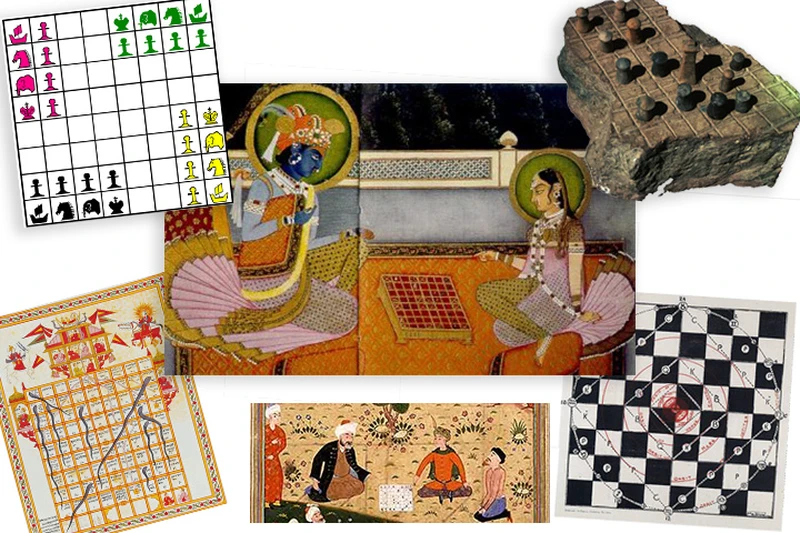
On a deeper level, chess represents the struggle between the forces of good and evil, light over darkness, internal conflict, not group conflict. Metaphysically, the faculties available can be used for good or evil, and chess represents the internal battle for our hearts and minds. In Dharmic traditions, the chess pieces can represent the powers of the soul, faculties of mind, perception, and more in the battle for control over a person's decisions. Will a person act according to dharma or give in to the false ego? Can the conditions of the material realm and trappings of the mind be overcome? Chess is played as a game between two people, but it is representative of our internal struggles. The game is to be taught to kids as a method to teach them the laws of Karma, how to approach decisions in life, and how to purify our thought processes. Self-improvement works best in groups because we all face similar internal struggles. Know thyself by playing chess! Chess helps in the self-improvement process by being a window into our deepest desires and motivations revealed in play, which can then be purified and prevent us from making future poor decisions.
In various systems, the pieces can represent spiritual forces and the board's physical locations and actions, or the board and pieces can be a combination of spiritual and physical representations. One example is the Jain system of eight types of Karma and the ahimsa principle mentioned in my previous essay, which can be mapped onto the eight-by-eight board and pieces. Chess represents our internal struggle against our bad Karma, the goal to overcome the false ego, limit suffering (ahimsa), and achieve eventual liberation (moksha). As the expression, the eyes see, the heart desires, the mind plots, and the limbs carry out. Chess represents the process of perception leading to the desire to act, of which the mind develops a plan for the limbs to carry out. The purpose of chess is to represent Karma, action-reaction, of the various ways we can react to our perceptions, desires, motivations, actions, and their consequences, with goals such as limiting harm, ahimsa, and fulfilling our dharma / duty. Today, chess is still most popularly used to teach children to think about the consequences of their actions and to think before they act. Most Dharmic traditions had a form of chess representing group conflict, helping plot out likely outcomes. However, I also need a deeper understanding of chess, representing the self-realization process, Karma, and a way to purify our minds.
Chess Reinterpreted in the West

Chess historians agree that chess started in the East and migrated West through the Islamic Golden Age to the current form canonized in Europe. See George Dean's Chess Masterpieces: One Thousand Years of Extraordinary Chess Sets for a pictorial historical overview of how chess morphed into the form familiar today. Western mythology hypothesized the origins of King Solomon, a game of Kings of a Biblical nature. Most players were unaware of the Eastern spiritual origins of chess. Chess became less a game of spirituality and internal transformation, focusing on interpersonal or group struggle. The military nature switched to a diplomatic nature to help predict the rise and fall of personalities, Kings, and Queens, as well as business interests. The pieces gradually shifted to represent the feudal system of Catholic Christian monarchs that dominated Europe.
As chess became more popular among the masses, the status of chess deteriorated into a simple gambling game. Early Islamic, Rabbinic, and Christian authorities in various locations and times forbade the game of chess for degenerating moral values and gambling. The Talmud debates whether people should be allowed to play chess, allowing it only as better than being idle because it can sharpen the mind. Rabbi Maimonides ruled professional chess players unworthy of serving in law courts, likely due to their connection to gambling and fortune telling, and this was a sign that top chess players of the time were degenerates. Islamic authorities worried that playing chess would lead to sin and increase people's tendency to engage in forbidden activities such as substance abuse, telling lies, cheating, false oaths, and gambling. As chess traveled West, the original meaning was lost, and the game developed a bad reputation.

Jewish Interpretations of Chess
Jews served as a conduit from East to West, and chess was a popular subject of early Rabbinic poetry. Rabbis often used the game as a parable for more profound spiritual lessons, including the warnings of the dangers of sinful activity affiliated with the game. The Kuzari of Rabbi Yehuda Halevi talks about chess as a game of Kings and a metaphor for free will and decision-making. These writings on chess and free will are an early precursor to Kotov's candidate moves and analysis trees and are similar to early Dharmic conceptions. The focus of chess as an allegory to free will helps rehabilitate the game's deeper meaning of understanding karmic processes and each individual's personal struggle with life's choices. Later, rabbinic writings started recommending teaching chess to kids to sharpen their thinking skills and learn to contemplate the consequences of their actions.
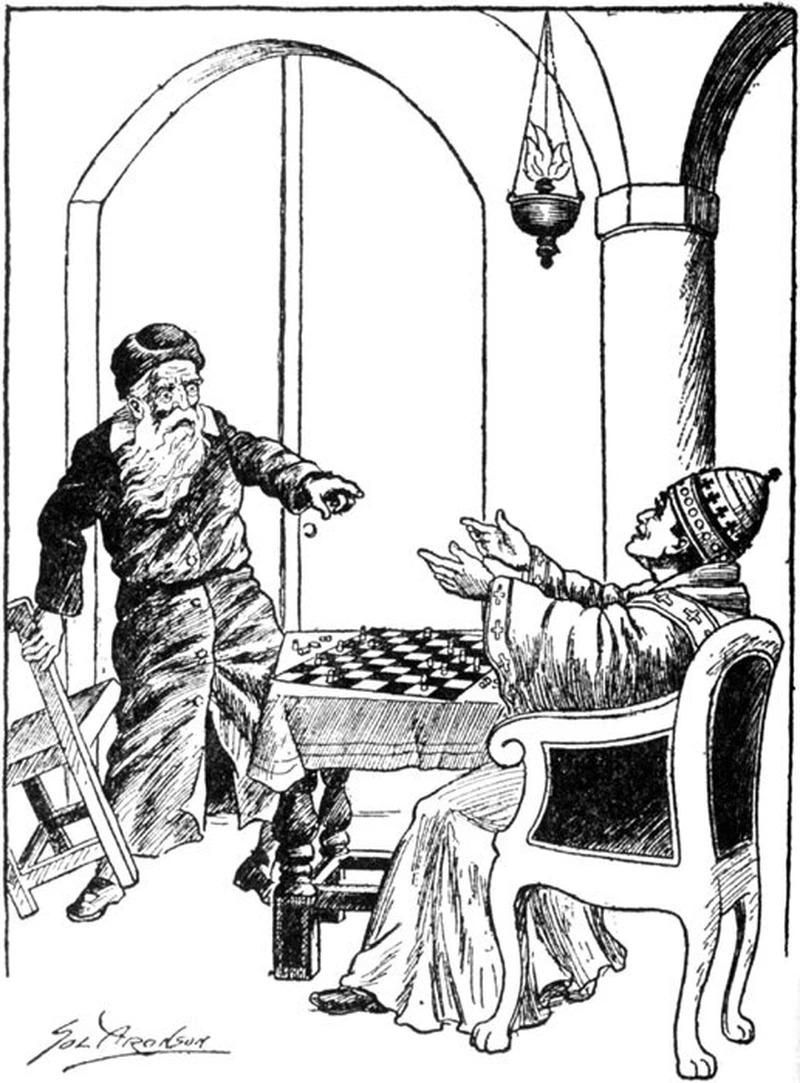
Chess became so popular among Jews in Europe it was codified into the High Holiday New Year's prayer service with the legend of Simeon Bar Isaac and his estranged son Elchonon, who became Pope. When coming to request the Pope, they played a game of chess, and the Pope won using a technique that the Rabbi had taught his son. From the unique chess combination, the Rabbi recognized that the Pope is, in fact, his long-lost son. In future essays, I hope further to detail Jewish history, chess, and Kabalistic conceptions. In many ways, chess served as an interfaith communication among Jews, Muslims, and Christians. Among the elite, chess was a game of diplomacy that served the original purpose of divination, but to the masses, chess often deteriorated to become another gambling game. However, even in the degenerate form of chess as a gambling game, the divination of future events and the rise and fall of personalities can still be seen as the purpose.
Another topic beyond the scope of this essay to return to in future essays is reincarnation and chess. In both Dharmic and Kabalistic conceptions, one of the spiritual forces that can be deciphered from chess is the transmigration of souls. Common was the belief that great chess players were reincarnations of previous great personalities attempting to further their mission and struggles not yet completed from previous generations. Chess can be used to help people figure out their mission in life. In Kabalistic terms, our Tikkun haolom, repair the world, the reason we are here, our greater mission that takes many lifetimes to accomplish.
Rise of Tournament and Competitive Chess
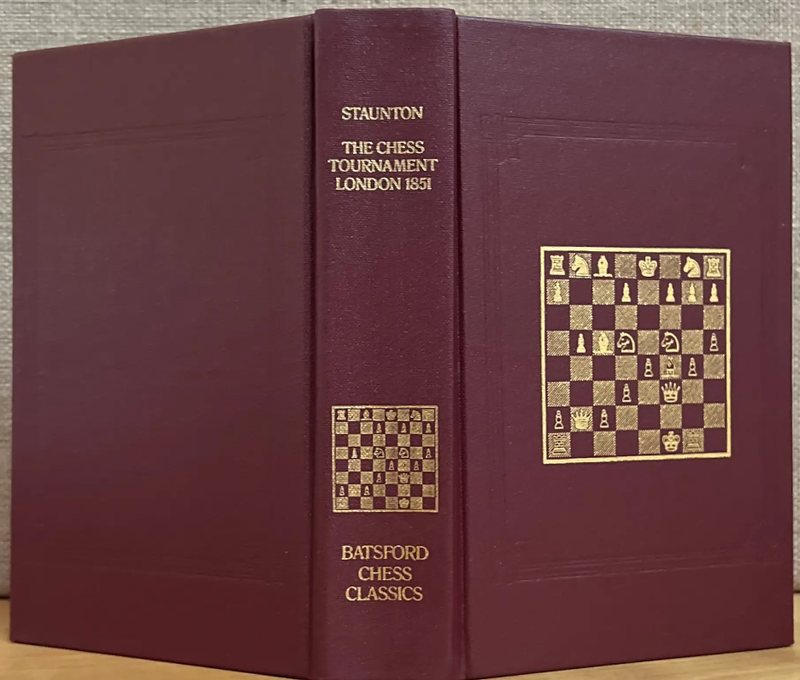
In 1851, Howard Staunton organized the first major international chess competition at the London Great Exhibition, the first World's Fair. Staunton led to the creation of tournament chess and a canonization of the rules, movement, names, and form of the pieces and notation system. Competitive chess became a sport bringing the top players together to determine and reward the best, eventually leading to a world championship. The pieces were standardized into the Western Christian feudal system we are familiar with today. Tournament chess operates without greater meaning other than competition. Competitors play to win purely based on the geometric patterns of the pieces, preparation, strategy, and mental skills. However, modern chess retains the European system of Christian monarchs, consisting of a king with a cross, queen, bishops, knights, rooks, and pawns, adapted to Christian Europe from the Eastern precursor forms of Chaturanga and Shatranj.
Although some of the earliest chess works focused on strategy, divination was the central role until the advent of tournament chess. Early authors concentrate on the life lessons that can be learned from chess, using chess analogies to help explain spiritual lessons. Strategic ideas were generalized to a deeper understanding of our actions' consequences and making better decisions in life than purely as a method to achieve victory over the board. After the rise of professional chess, less focus was put on the meaning of chess but on winning strategy. Today, chess theory is almost exclusively dedicated to the best path to victory. These strategies are neutral in meaning, and most top players today insist chess has no meaning and is just a game or sport. Anyone talking about the deeper meaning of chess is unlikely a competitive player and laughed out of most serious chess clubs, ironically often relegated to coaching youth. Regardless of the symbolic nature, one can understand the meaning of the pieces and the purpose of the game as one pleases.
Conclusion
The rise of cognitive science has switched the role of teaching chess to children more to general thinking skills than the historical role of Karma, morals, and ethics to help children understand the consequences of their actions. Chess in school programs focuses more on mathematical reasoning than moral reasoning. However, most casual chess players and youth coaches still focus on the historical constant meaning of chess as a way to teach children basic thinking skills and to help understand the consequences of our actions. The deeper meaning of chess remains open to all.
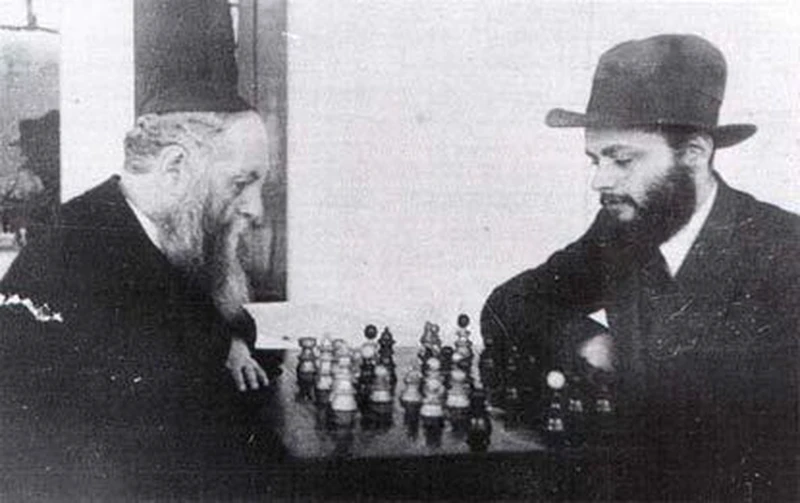
Many spiritual leaders, such as the Lubavitcher Rebbe and Rabbi Menachem Mendel Schneerson of blessed memory, frequently used chess metaphors to express spiritual concepts, words of inspiration, and examples of the self-improvement process. In upcoming essays, I will go more in-depth about the role of chess in Judaism and the historical role chess played in diplomacy and interfaith between Jews and Christians and Messianic theology. I will also further explore the Kabalistic and Dharmic systems of how chess can represent the interaction between the material and spiritual worlds and help us in our self-improvement processes to purify our hearts and minds and make optimal life decisions, minimizing harm in dealings with others. From there, I will delve into current research on chess, expertise, intelligence, and decision-making from cognitive science and consciousness studies related to the predictive mind and how this all relates to my Multiple Truth Hypothesis
You may also like
 DIAChessClubStudies
The Ahimsa Principle
A Fundamental Guide to Living nvasquez
Learning from Jacob Aagaard
GM Aagaard was on several podcasts over the last few years, I listened to all of them. NDpatzer
Science of Chess: What makes a move seem "Brilliant?"
Sometimes a chess move warrants not just one, but two exclamation points - but what makes us call a … DIAChessClubStudies
Chess as a Pedagogical Tool – Four Basic Concepts
How to use Chess to teach children basic thinking skills! DIAChessClubStudies
3D Printing & Additive Manufacturing
A History and Overview of 3D Printers FM benkonian