
Chess and Intelligence: How Playing Chess Can Boost Cognitive Abilities
This blog delves into the fascinating findings of a research paper titled "Intelligence and Chess" by Fernand Gobet and Guillermo Campitelli.Chess has long been celebrated as a game of strategy, foresight, and mental agility. But beyond its reputation as a challenging pastime, chess research has uncovered compelling evidence that playing chess can enhance cognitive abilities, particularly in intelligence-related areas. We’ll explore how chess impacts intelligence, the cognitive processes involved in chess expertise, and the neuroscientific evidence supporting the link between chess and brain function. Whether you're a beginner or an experienced player, this chess research will provide valuable insights into the cognitive benefits of chess.
The Cognitive Benefits of Chess: What Chess Research Reveals
Chess is more than just a game; it’s a mental workout that engages multiple cognitive functions. The chess research paper highlights that chess requires high-level cognitive skills such as problem-solving, memory, pattern recognition, and strategic planning. These skills are not only essential for mastering the game but also transferable to academic and professional settings. Here’s a breakdown of how chess impacts cognitive development:
- Problem-Solving Skills: Chess requires players to think several moves ahead, anticipate opponents' strategies, and adapt to changing situations. This enhances logical reasoning and strategic thinking, which are crucial for tasks in mathematics, science, and everyday decision-making.
- Memory Improvement: Players must remember opening theories, endgame patterns, and past games. This strengthens working memory and long-term memory, which are vital for academic success and professional performance.
- Pattern Recognition: Chess players develop the ability to recognize complex patterns on the board, which enhances visual-spatial skills and cognitive efficiency. This skill is transferable to fields like engineering, architecture, and computer science.
- Attention and Concentration: Chess demands sustained focus, which can improve a player’s ability to concentrate on tasks in school or work.
- Executive Functions: Chess enhances planning, foresight, and self-regulation, all of which are key components of executive functioning. These skills are essential for managing time, organizing tasks, and achieving goals.
Chess and Intelligence: What the Research Says
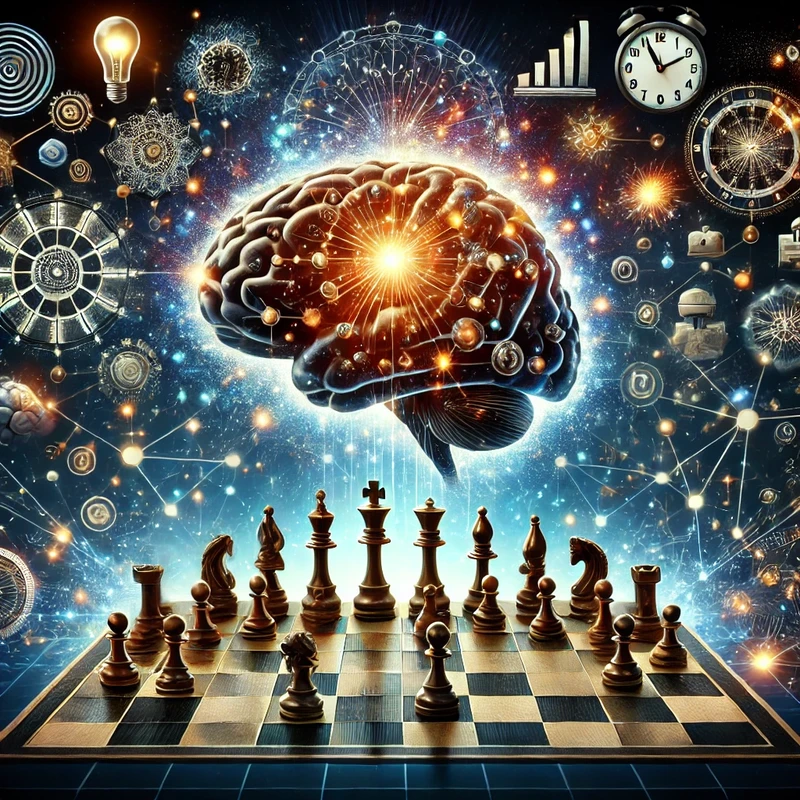
The chess research paper by Gobet and Campitelli explores the relationship between chess and intelligence, focusing on both general intelligence and specific cognitive abilities. The research suggests that chess players tend to have higher IQs than the general population, particularly in areas related to performance IQ (non-verbal intelligence). Let’s take a closer look at the evidence.
Chess and General Intelligence
General intelligence, often measured by IQ tests, encompasses a wide range of cognitive abilities, including logical reasoning, problem-solving, and memory. The chess research paper cites several studies that demonstrate a positive correlation between chess skill and general intelligence.
| Study | Participants | Findings |
|---|---|---|
| Frydman and Lynn (1992) | 33 young Belgian chess players | Chess players had an average general IQ of 121, higher than the population mean of 100. Performance IQ (129) was significantly higher than verbal IQ (109). |
| Doll and Mayr (1987) | 27 chess masters and 88 non-chess players | Chess masters scored higher in general intelligence, information-processing capacity, and working speed. |
These studies suggest that chess players tend to have higher general intelligence, which may be due to the cognitive demands of the game. However, the direction of causality is unclear: it’s possible that more intelligent individuals are drawn to chess, or that playing chess enhances intelligence.
Chess and Visuo-Spatial Intelligence
Visuo-spatial intelligence, which involves the ability to visualize and manipulate objects in space, is particularly important in chess. The chess research paper highlights mixed findings regarding the relationship between chess and visuo-spatial intelligence.
| Study | Participants | Findings |
|---|---|---|
| Frydman and Lynn (1992) | 33 young Belgian chess players | Chess players had significantly higher performance IQ (which includes visuo-spatial tasks) than verbal IQ. |
| Doll and Mayr (1987) | 27 chess masters and 88 non-chess players | Chess masters did not outperform non-players in visuo-spatial tasks, despite the highly visual nature of chess. |
Interestingly, while children who play chess tend to show higher visuo-spatial intelligence, this effect is less pronounced in adults. This suggests that visuo-spatial skills may be more important in the early stages of chess development, but other factors like motivation and practice become more critical as players advance.
The Neuroscience of Chess: How Chess Activates the Brain
The chess research paper also explores the neuroscientific evidence supporting the cognitive benefits of chess. Using advanced brain imaging techniques like functional magnetic resonance imaging (fMRI) and positron emission tomography (PET), researchers have been able to map brain activity during chess play. Here’s what they found:
- Novice Players: When novice players analyze chess positions, brain regions such as the premotor areas, frontal lobes, parietal cortices, occipital lobe, and cerebellum are activated. These areas are associated with visual processing, planning, and motor coordination.
- Expert Players: Expert players show less activation in the posterior areas of the brain, indicating that they process information more efficiently. They also exhibit activation in the caudate nucleus, a region linked to pattern recognition and automatic processing.
- Pattern Recognition: Expert players are better at recognizing specific patterns on the chessboard, which is reflected in the activation of the temporal-occipital areas and collateral sulci. This suggests that chess training enhances visual-spatial abilities and cognitive efficiency.
- Cognitive Efficiency: As players become more skilled, their brain activity becomes more focused and efficient. This is evidenced by the reduced volume of brain activation in experts compared to novices.
Chess and Handedness: A Biological Marker of Talent?
The chess research paper also explores the relationship between chess skill and handedness, based on Geschwind and Galaburda’s (1985) theory of talent. The theory suggests that individuals with non-right-handedness (left-handed or ambidextrous) may have a biological advantage in visuo-spatial domains like chess.
| Study | Participants | Findings |
|---|---|---|
| Cranberg and Albert (1988) | 266 US chess players | 18% of chess players were non-right-handed, compared to 10-13.5% in the general population. |
| Gobet and Campitelli (2001) | 101 male chess players in Buenos Aires | 17.9% of chess players were non-right-handed, consistent with previous findings. |
These studies suggest that non-right-handed individuals may be overrepresented in the chess population, possibly due to enhanced visuo-spatial abilities associated with right-hemisphere dominance.
Conclusion: The Cognitive Power of Chess
The chess research presented in this paper highlights the profound impact of chess on cognitive abilities, particularly in areas related to intelligence, problem-solving, and memory. While the exact mechanisms remain unclear, the evidence suggests that chess can enhance cognitive skills and may even contribute to higher intelligence. Whether you’re a novice or an expert, the cognitive benefits of chess are undeniable. So, the next time you sit down to play a game of chess, remember: you’re not just moving pieces on a board - you’re training your brain for success.
By understanding the science behind chess, we can appreciate its value not just as a game but as a tool for cognitive and academic growth. Whether you’re a parent, educator, or chess enthusiast, the chess research is clear: chess is a game worth playing.
Caissa School of Chess is a premier institution dedicated to helping players of all levels enhance their cognitive abilities through chess. By offering structured training, personalized coaching, and engaging lessons, Caissa empowers students to develop critical thinking, memory, and problem-solving skills. Whether you're a beginner or an advanced player, Caissa’s expert guidance ensures you unlock the full potential of chess to boost intelligence and strategic thinking. Join Caissa and elevate your game - and your mind!
References
- Gobet, F., & Campitelli, G. (2014). Intelligence and Chess. Psychological Research, 106-114.
- Frydman, M., & Lynn, R. (1992). The general intelligence and spatial abilities of gifted young Belgian chess players. British Journal of Psychology, 83, 233-235.
- Doll, J., & Mayr, U. (1987). Intelligence and chess performance—A study of chess experts. Psychological Contributions, 29, 270-289.
- Geschwind, N., & Galaburda, A. M. (1985). Cerebral lateralization: Biological mechanisms, associations, and pathology. Archives of Neurology, 42, 428-459.
- Cranberg, L., & Albert, M. L. (1988). The chess mind. In L. K. Obler & D. Fein (Eds.), The exceptional brain: Neuropsychology of talent and special abilities. New York: Guilford Press.
You may also like
 CircleChessTeam
The World's Biggest Chess Tournament by CircleChess with Free entry & Rs 5 Lakh
In the ever-evolving world of chess, CircleChess, Proudly endorsed by World Champion Gukesh who stan… CircleChessTeam
Inside Michal Mazurkiewicz's World Record: 16 Chess Games While Diving 700 Times
Chess has been played on mountaintops, in zero gravity, and even by mail - but nothing compares to t… CircleChessTeam