 Canada
Hi! My name is Zachary Dukic. I am a Canadian FIDE Master, an experienced chess coach, and Ontario Certified Teacher based in the Niagara region.
My peak ratings are 2300 FIDE and 2423 CFC, and I earned my first International Master norm at the 2021 Sunway Sitges International Chess Festival. Over the course of my playing career, I have defeated 11 Grandmasters, along with many International Masters and FIDE Masters.
Chess and teaching have been two of the biggest parts of my life for many years. I have coached chess for more than 10 years, working with students ranging from complete beginners to players above 2300 CFC. My background in education has had a major influence on the way I coach: I believe strong chess instruction should be structured, personalized, challenging, and understandable.
I speak English and French fluently and can also communicate proficiently in Italian.
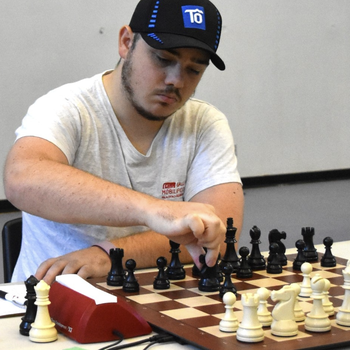
FM Zachary Dukic
Stop guessing what to study. Start following a training plan that works.
About me
Playing experience
Some of the tournament performances I am most proud of include:
Canadian Championship / Zonal 2019
I scored 5.5/9, tying for fifth place. My victories included GM Kaiqi Yang, IM Olivier Kenta Chiku-Ratté and FM Richard Chen.
Sunway Sitges International Chess Festival 2021
I scored 6/10, defeating a WGM, an FM, two IMs and a GM along the way. The performance earned me my first International Master norm.
Canadian Championship / Zonal 2022
After starting the tournament 0/2, I finished with 6/9. My run included victories over IM Michael Barron, IM Mark Plotkin and GM Bator Sambuev, followed by a final-round draw against IM Shawn Rodrigue-Lemieux. The result earned me the FIDE Master title.
Canadian Open 2024
I scored 7/9 and tied for second place in a strong field that included numerous Grandmasters and International Masters.
Career GM wins: 11
Bator Sambuev ×3
Boris Avrukh
Kaiqi Yang
Ruslan Pogorelov
Joshua Sheng
Oliver Barbosa
Magesh Panchanathan
Dimitri Komarov
Artem Omelja
Canadian Championship / Zonal 2019
I scored 5.5/9, tying for fifth place. My victories included GM Kaiqi Yang, IM Olivier Kenta Chiku-Ratté and FM Richard Chen.
Sunway Sitges International Chess Festival 2021
I scored 6/10, defeating a WGM, an FM, two IMs and a GM along the way. The performance earned me my first International Master norm.
Canadian Championship / Zonal 2022
After starting the tournament 0/2, I finished with 6/9. My run included victories over IM Michael Barron, IM Mark Plotkin and GM Bator Sambuev, followed by a final-round draw against IM Shawn Rodrigue-Lemieux. The result earned me the FIDE Master title.
Canadian Open 2024
I scored 7/9 and tied for second place in a strong field that included numerous Grandmasters and International Masters.
Career GM wins: 11
Bator Sambuev ×3
Boris Avrukh
Kaiqi Yang
Ruslan Pogorelov
Joshua Sheng
Oliver Barbosa
Magesh Panchanathan
Dimitri Komarov
Artem Omelja
Teaching experience
I have more than 10 years of experience teaching chess privately, in groups, and in classroom environments.
I also hold a Bachelor of Arts in Second Language Teaching and a Bachelor of Education from the University of Ottawa and am an Ontario Certified Teacher. My formal training as an educator has strongly shaped my approach to chess coaching.
I have worked with players at virtually every level, from children learning the rules for the first time to tournament players above 2300 CFC.
One of my longtime students began working with me at approximately 1600 CFC. Within two years, he had reached 2200, won a Canadian U12 national title, and begun defeating master-level players. Other students I have worked with have gone on to win provincial and national titles and reach master strength.
My goal is not simply to give students more chess information. It is to identify what is actually holding them back and build a training process that helps them improve independently.
I also hold a Bachelor of Arts in Second Language Teaching and a Bachelor of Education from the University of Ottawa and am an Ontario Certified Teacher. My formal training as an educator has strongly shaped my approach to chess coaching.
I have worked with players at virtually every level, from children learning the rules for the first time to tournament players above 2300 CFC.
One of my longtime students began working with me at approximately 1600 CFC. Within two years, he had reached 2200, won a Canadian U12 national title, and begun defeating master-level players. Other students I have worked with have gone on to win provincial and national titles and reach master strength.
My goal is not simply to give students more chess information. It is to identify what is actually holding them back and build a training process that helps them improve independently.
Other experiences
My teaching background extends well beyond chess. I hold degrees in Second Language Teaching and Education from the University of Ottawa and am an Ontario Certified Teacher, with experience teaching children and adults in both classroom and private settings.
My educational background has given me extensive experience adapting instruction to different ages, learning styles and levels of ability. I have taught French as a Second Language, French Immersion and English, and have also taught Italian.
These experiences have strongly influenced the way I approach chess coaching. Good teaching is not simply about knowing the subject well. It is about understanding how a student learns, communicating ideas clearly, recognizing when an explanation is not working, and finding another way to make the concept click.
My educational background has given me extensive experience adapting instruction to different ages, learning styles and levels of ability. I have taught French as a Second Language, French Immersion and English, and have also taught Italian.
These experiences have strongly influenced the way I approach chess coaching. Good teaching is not simply about knowing the subject well. It is about understanding how a student learns, communicating ideas clearly, recognizing when an explanation is not working, and finding another way to make the concept click.
Best skills
Historically, I have always gravitated toward dynamic, attacking chess. In recent years, however, I have developed a real appreciation for positional play and endgame technique as well. This has made me a more well-rounded player and coach, and allows me to work effectively with students who have very different styles and strengths.
Rather than trying to shape every student into the same type of player, I want to help them understand chess more deeply while developing a style that suits them.
Depending on the student, lessons may focus on:
calculation and tactical decision-making
positional understanding
converting advantages
endgames
opening preparation
strategic planning
analysing your own games
tournament preparation
time management and practical decision-making
building an effective training routine
One of my biggest strengths as a coach is identifying recurring weaknesses. Rather than treating every mistake as an isolated event, I look for patterns in a student's games and build lessons around those patterns.
Rather than trying to shape every student into the same type of player, I want to help them understand chess more deeply while developing a style that suits them.
Depending on the student, lessons may focus on:
calculation and tactical decision-making
positional understanding
converting advantages
endgames
opening preparation
strategic planning
analysing your own games
tournament preparation
time management and practical decision-making
building an effective training routine
One of my biggest strengths as a coach is identifying recurring weaknesses. Rather than treating every mistake as an isolated event, I look for patterns in a student's games and build lessons around those patterns.
Teaching methodology
My lessons are highly interactive. I normally use Lichess Studies alongside voice or video communication so that students are constantly analysing positions, suggesting moves and explaining their thought process.
I do not believe the most effective lesson is simply going through an entire game move by move while the coach points out mistakes.
Instead, I often take critical positions from a student's games and connect them to broader concepts. If several games reveal the same weakness, such as poor piece coordination, calculation errors, weak prophylaxis or difficulty converting an advantage, that becomes a teaching theme.
This gives students a framework for understanding why a mistake occurred rather than simply being told that a particular move was bad.
I also strongly encourage students to analyse their own games before using an engine. Even a short written reflection forces a player to reconstruct their thinking, identify difficult moments and take responsibility for their decisions.
Over time, we can then compare these games and determine whether the same mistakes are continuing to appear.
I do not believe the most effective lesson is simply going through an entire game move by move while the coach points out mistakes.
Instead, I often take critical positions from a student's games and connect them to broader concepts. If several games reveal the same weakness, such as poor piece coordination, calculation errors, weak prophylaxis or difficulty converting an advantage, that becomes a teaching theme.
This gives students a framework for understanding why a mistake occurred rather than simply being told that a particular move was bad.
I also strongly encourage students to analyse their own games before using an engine. Even a short written reflection forces a player to reconstruct their thinking, identify difficult moments and take responsibility for their decisions.
Over time, we can then compare these games and determine whether the same mistakes are continuing to appear.